

The short answer
A full-face helmet protects the most and is quiet, the best choice for sporty riding and motorways. A modular helmet has a chin bar that flips up, ideal for touring riders and glasses wearers. An open-face (jet) helmet leaves your face free and is airy, mainly for scooters and calm city riding. An adventure helmet combines a peak and a wide field of view with a full-face construction, built for mixing tarmac and gravel. If in doubt, choose a full-face: it suits most riders and most rides.
The four types at a glance
- Full-face: highest protection, quiet and aerodynamic. For sporty riding, motorways and most riders.
- Modular: high protection with the chin bar closed, practical but slightly heavier. For touring, glasses wearers and frequent stops.
- Open-face: face and chin exposed, airy but with more wind noise. For scooters, city and short rides.
- Adventure: full-face construction with a peak and wide view. For adventure, gravel and mixed terrain.
Full-face: the safe standard
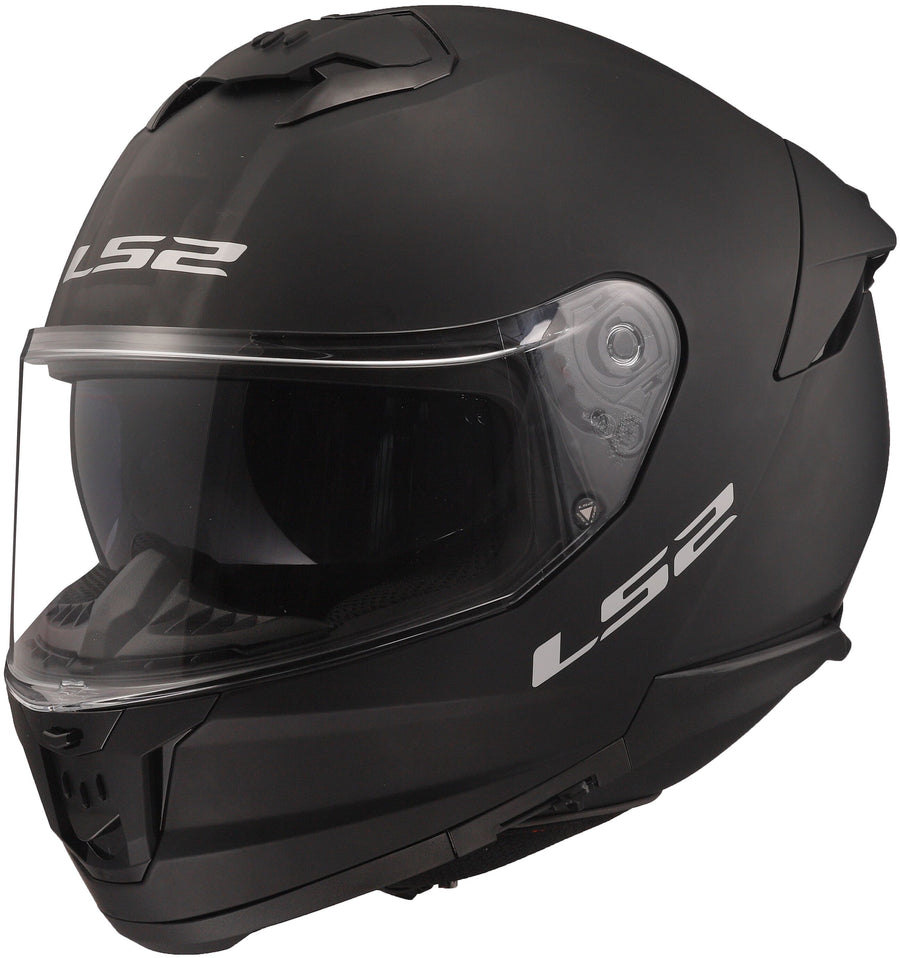
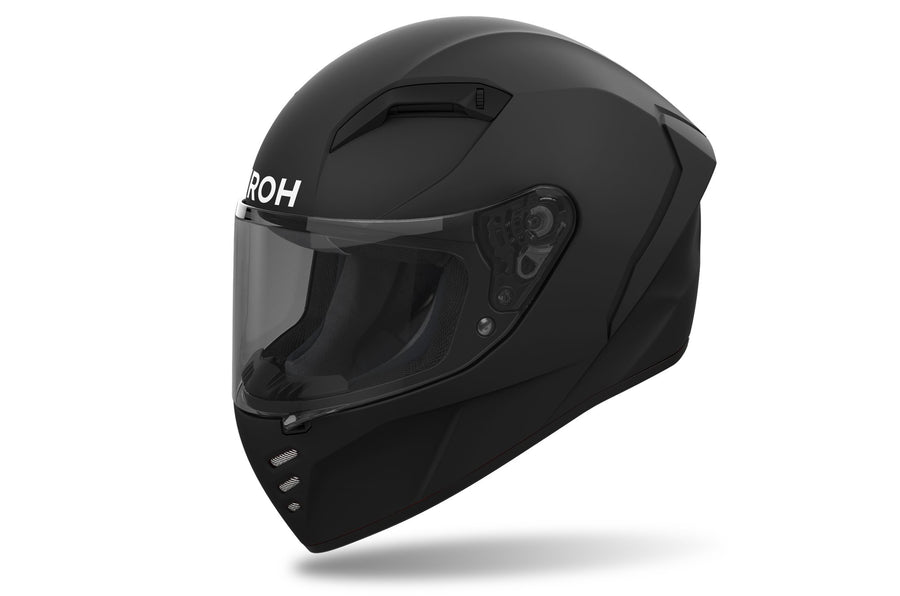
On a full-face helmet the shell is one piece, chin bar included. That makes it strong, quiet and well streamlined. In a crash the chin is one of the most frequently hit areas, and that is where a full-face protects you best. For sporty riders and anyone doing a lot of motorway miles, it is the logical choice.
A strong entry option with a drop-down sun visor, so you need no sunglasses when the sun is low:
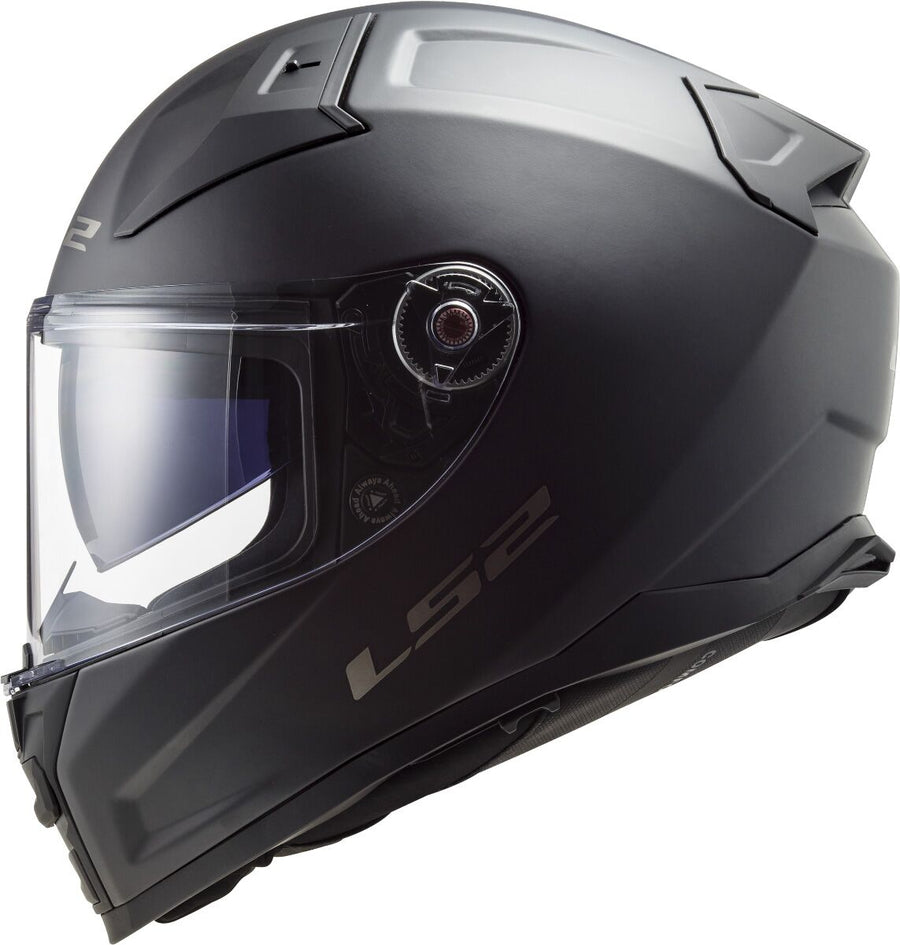
Want a lighter helmet with a sportier shell? The LS2 Vector II is a good step up, also available in carbon.
Modular: the best of both worlds
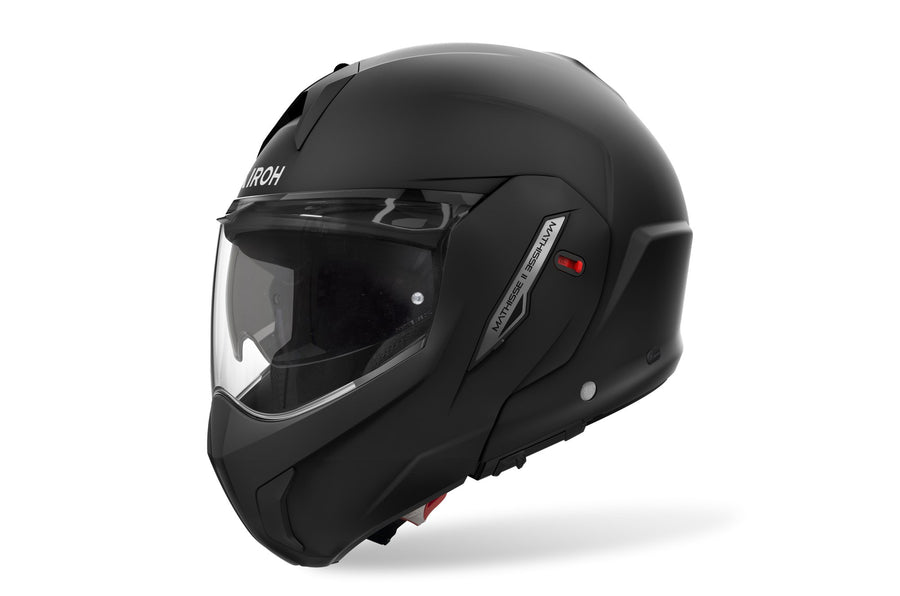
A modular helmet, also called a flip-up, has a chin bar you lift. At a fuel stop, for a chat or a coffee, you keep the helmet on. Glasses wearers find it easier to put on and take off. The trade-off is that the hinge mechanism makes it slightly heavier than a full-face.
If you ride with the chin bar open, check that the helmet is approved for it. That is shown as P/J on the label: P for riding with the chin bar closed, J for open.
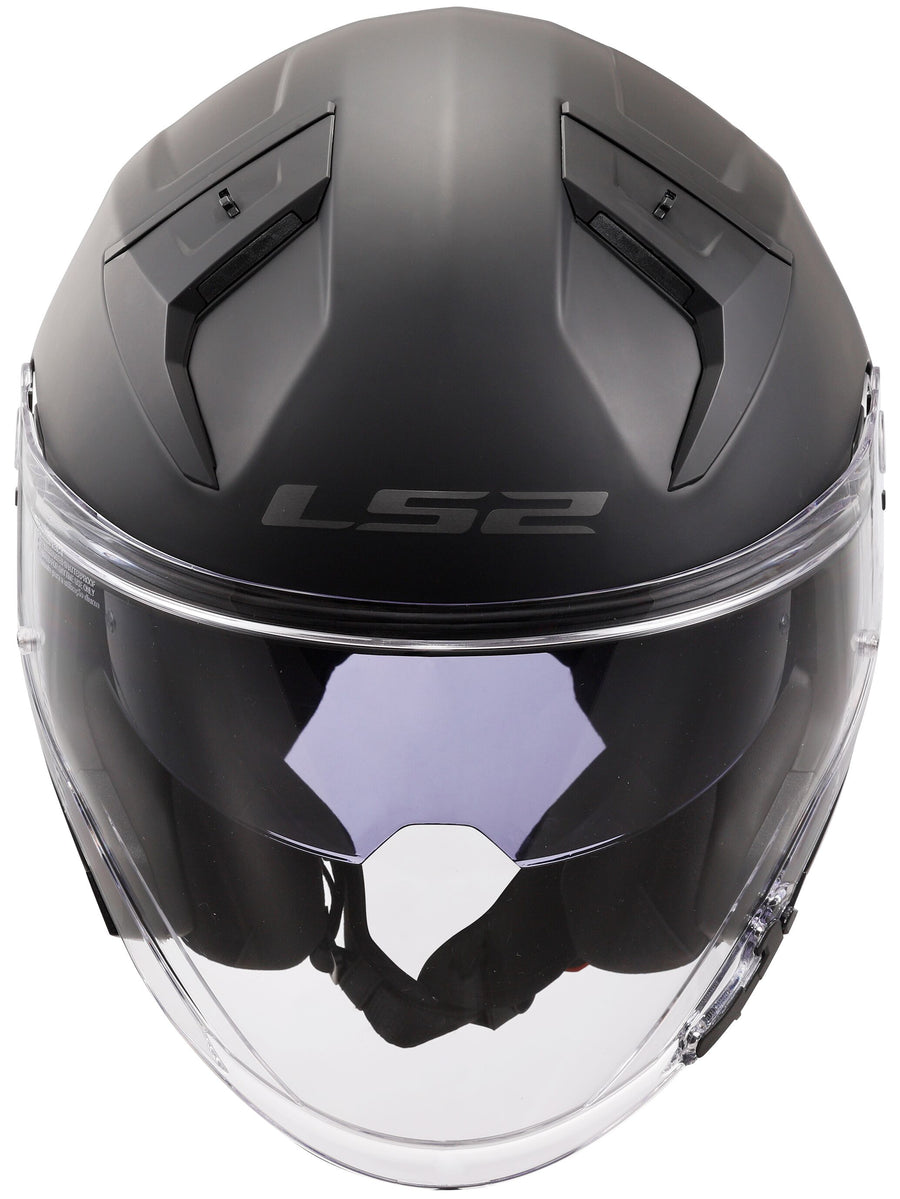
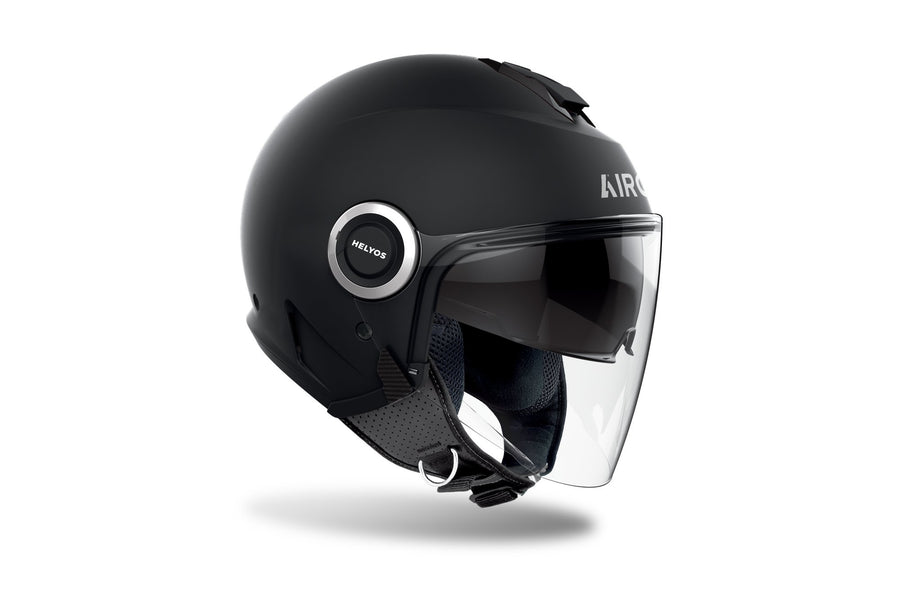
Open-face: free and airy
An open-face helmet protects your head and ears but leaves your face and chin exposed. You get the widest view and the most fresh air, but also more wind noise and less protection in a fall. For scooters, retro bikes and short city rides it is a pleasant choice. For motorways we recommend a full-face or modular helmet.
Adventure: for riders who leave the tarmac

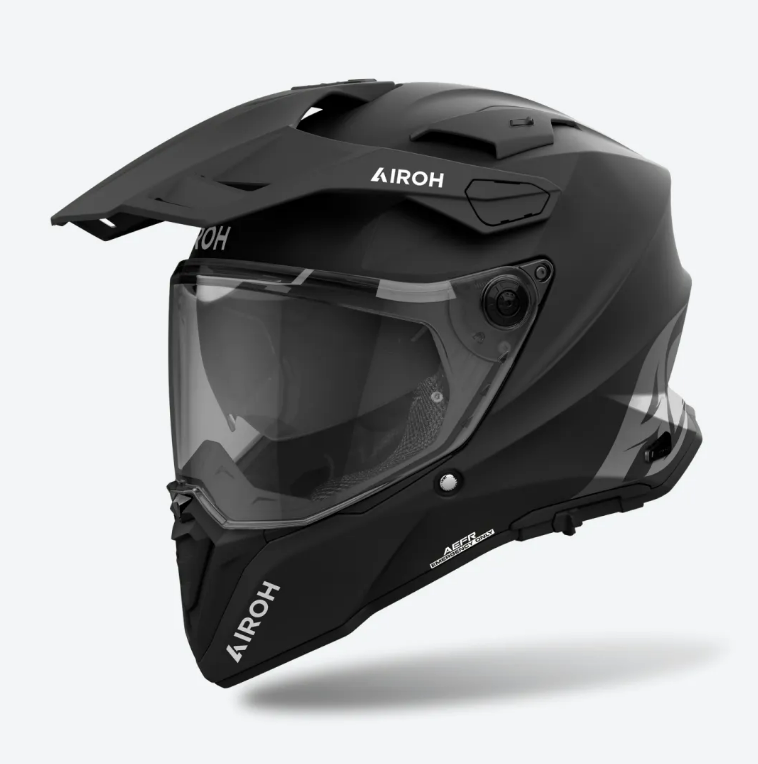
An adventure helmet combines the full-face construction of a road helmet with a peak and a wide field of view like a motocross helmet, but with a visor. The peak blocks sun and flying gravel off-road. On the motorway it does catch wind, so look for a helmet with a removable peak if you mostly ride tarmac.
ECE 22.06: what to look for
ECE 22.06 is the current European approval standard for motorcycle helmets. Compared with the previous standard, helmets are tested at more points and with more types of impact, and the visor is assessed more strictly too. Every helmet in this guide is approved to ECE 22.06. The approval label is on the chin strap.
Measuring your size
A helmet that is too loose protects less and moves at speed. Here is how to measure:
- Use a soft tape measure around your head, about one finger above your eyebrows and over the widest point at the back.
- Pick the matching size in the brand's size chart.
- A new helmet should feel snug without pressure points. The lining settles a little after a few rides.
- Put it on, fasten the strap and try to roll it forward. If it rolls over your forehead, it is too big.
Between two sizes? Use our size advisor or send us your head circumference.
Frequently asked questions
Is a modular helmet as safe as a full-face?
With the chin bar closed and locked, a properly approved modular helmet offers high protection. A full-face does have the advantage that the chin bar is one piece with the shell, without a hinge.
When should I replace my helmet?
Always after a crash or knock, even if you see nothing, because the impact-absorbing liner inside may be compressed. Many manufacturers also advise replacing a helmet after around five years of use, as materials age.
Can I buy a second-hand helmet?
Better not. You do not know whether it has ever been dropped, and internal damage is invisible.
Which helmet is quietest?
Generally a full-face, because the shell is closed and streamlined. We always recommend earplugs on long rides as well.
What does shipping cost?
Shipping costs for your country are shown in your cart before you pay.