


The short answer
Waterproofing on motorcycle gear is expressed as a water column in millimetres. 10K means 10,000 mm, 20K means 20,000 mm, and so on. The higher the number, the longer the fabric resists water pressure. For commuting and short rides, 10K is enough. If you ride long days through steady rain, you want 20K or higher. Gore-Tex is not a higher number, it is a membrane from a manufacturer that guarantees you stay dry.
More important than the number is the construction: taped seams, waterproof zips and a fit that closes the critical points. A jacket rated at 30,000 mm with an open collar will still let you get wet.
What the water column actually measures
In this test a tube is placed on the fabric and slowly filled with water. The height at which the first drops come through is the water column. A fabric that reaches 20,000 mm is called 20K.
That pressure sounds abstract, but on a bike it is very real. Rain hitting your chest and shoulders at 120 km/h, and your own weight on a wet seat, push water into the fabric with force. That is why the seat area, shoulders and knees are always the first places cheap gear lets water through.
| Rating | Water column | What it covers |
|---|---|---|
| 5K | 5,000 mm | Light showers, short rides, emergency solution |
| 10K | 10,000 mm | Commuting, day rides with some rain |
| 20K | 20,000 mm | Touring and adventure, hours in the rain |
| 30K and higher | 30,000 mm and higher | Long trips, all seasons, offroad in bad weather |
Alongside waterproofing there is often a second number for breathability, expressed in grams of water vapour per square metre per 24 hours. That figure decides whether you get wet from the inside through your own sweat. A fully sealed rain jacket keeps rain out but moves almost no vapour outward. That is why a cheap rain suit feels clammy after an hour.
Waterproof is not the same as water repellent
This is where most bad purchases start.
Water repellent means the outer fabric has a coating that makes water bead off. That works fine against a short shower, but the treatment wears off and saturates. Once the outer fabric soaks through, the jacket feels heavy and cold, even though the membrane underneath is still sealed.
Waterproof means there is a membrane holding water back, with taped seams. Without taped seams gear always leaks, because every needle leaves holes in the material.
On product pages you will also see 2-layer, 2.5-layer and 3-layer. In short: with 3-layer the membrane is bonded between the outer fabric and the lining, which makes it tougher and more breathable. In cheaper construction the membrane hangs loose, which is lighter and cheaper but lasts less long.
Gore-Tex, HydraDri, Dryway: what is the difference?
Gore-Tex is a membrane made by W.L. Gore. What you buy is not just the fabric but the control over it: Gore approves the complete garment, including seams and zips, and puts its own dryness promise on it. That is why Gore-Tex costs more and why brands run it as a separate product line.
Alongside that, almost every brand has its own membrane. Leatt uses HydraDri, with the 20K, 30K and 35K levels visible in the product names. Halvarssons and Lindstrands work with their own membrane solutions. Those in-house membranes are not automatically worse. They are less strictly checked by a third party, and therefore usually cheaper at the same stated ratings.
Practical rule of thumb: if you are buying a jacket or boot that has to be your only one for years, Gore-Tex is worth the money because the guarantee covers the whole garment. If you are buying for three seasons or a specific kind of riding, a brand membrane like HydraDri usually gives you more for your money.
Membrane in the jacket, or a rain suit over the top?
There are three routes to staying dry, and they are not mutually exclusive.
| Solution | Strength | Weakness |
|---|---|---|
| Membrane built into the jacket | Always with you, no changing at the roadside, best fit | Warmer in summer, higher purchase price |
| Vented jacket with a separate rain layer | Cool in summer, dry when needed | You have to stop and change |
| Rain suit over your normal gear | Cheap, packs small, fits over anything | Clammy in warm weather, less fit |
Most experienced riders combine: a good three-season jacket with a membrane for everyday rides, and a compact rain suit in the luggage for the days it really pours.
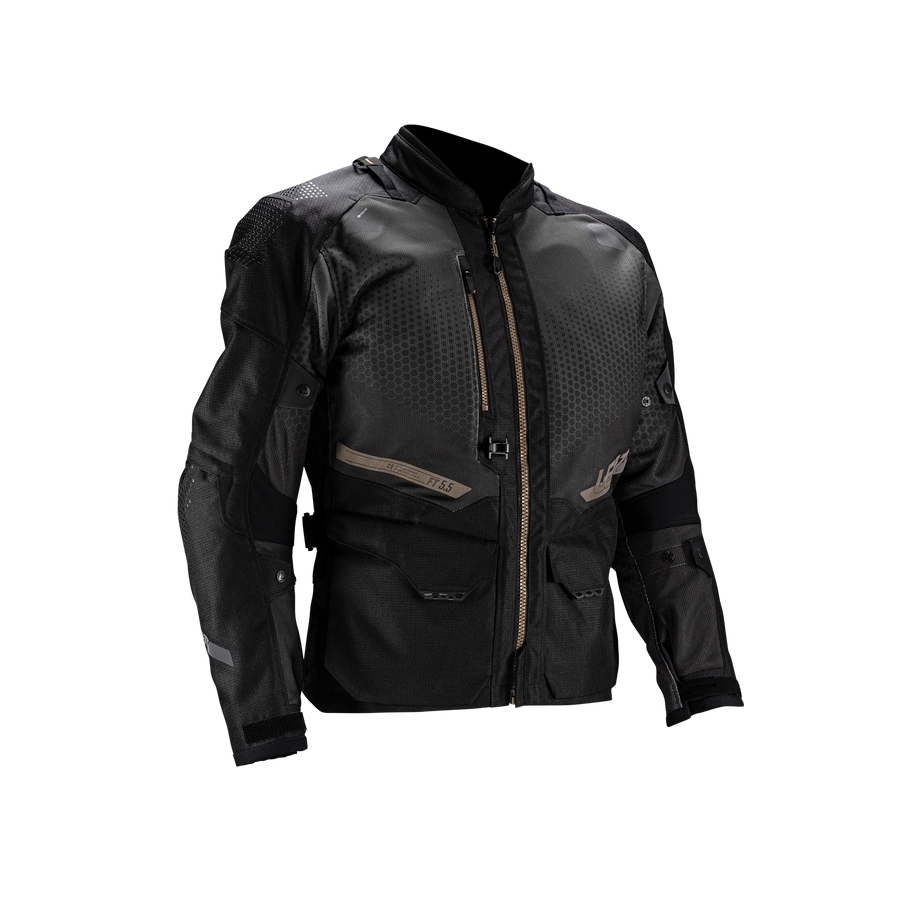
The FlowTour 5.5 is a good example of route two: a vented jacket with a separate HydraDri 20K layer you wear over or under it once the weather turns.

The DriTour 5.5 takes route one: the membrane is built in, with AA certification and protectors, so nothing needs changing on the road.
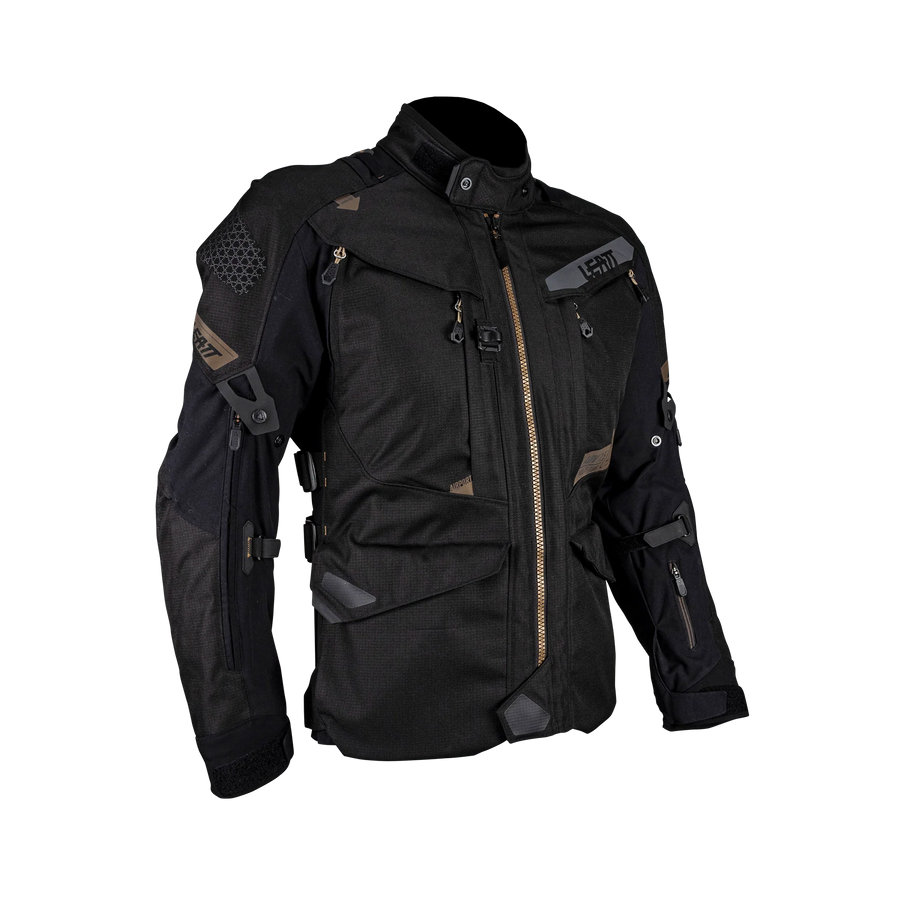
For long trips through changeable weather the MultiTour 7.5 puts you at 30K, with removable layers so the same jacket stays usable all year.
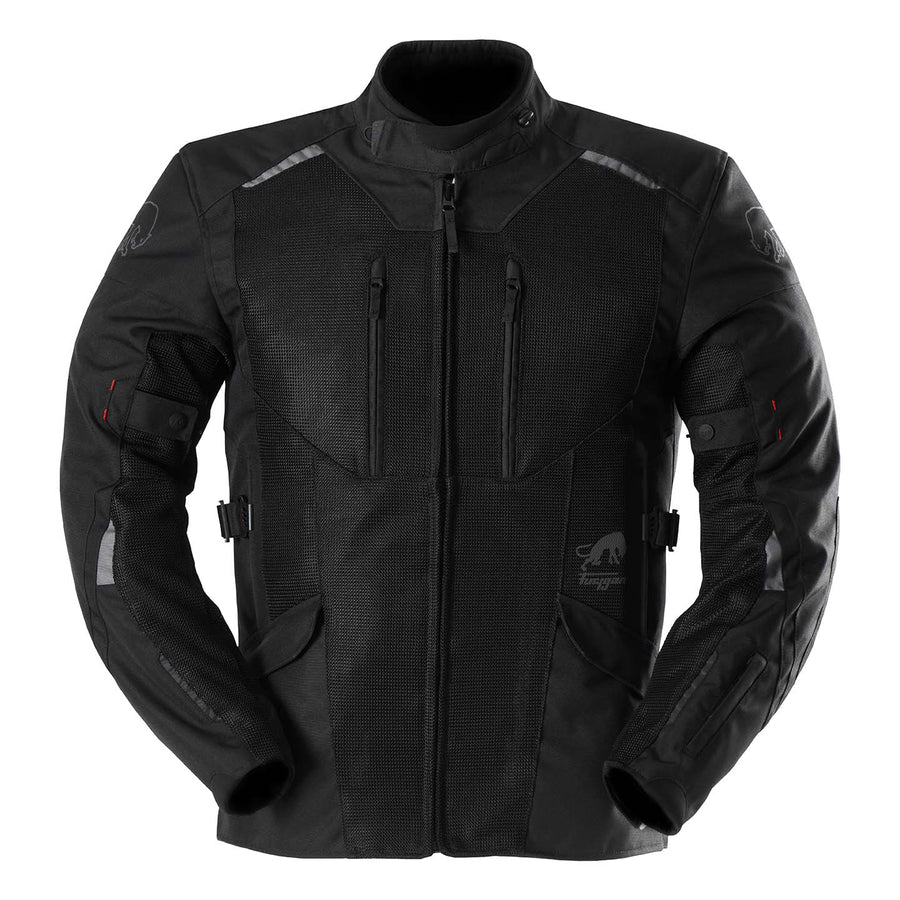
If you want something affordable that is waterproof and still vents, the Furygan Brooks Vented+ is a logical entry point.
Rain gear to wear over your normal kit
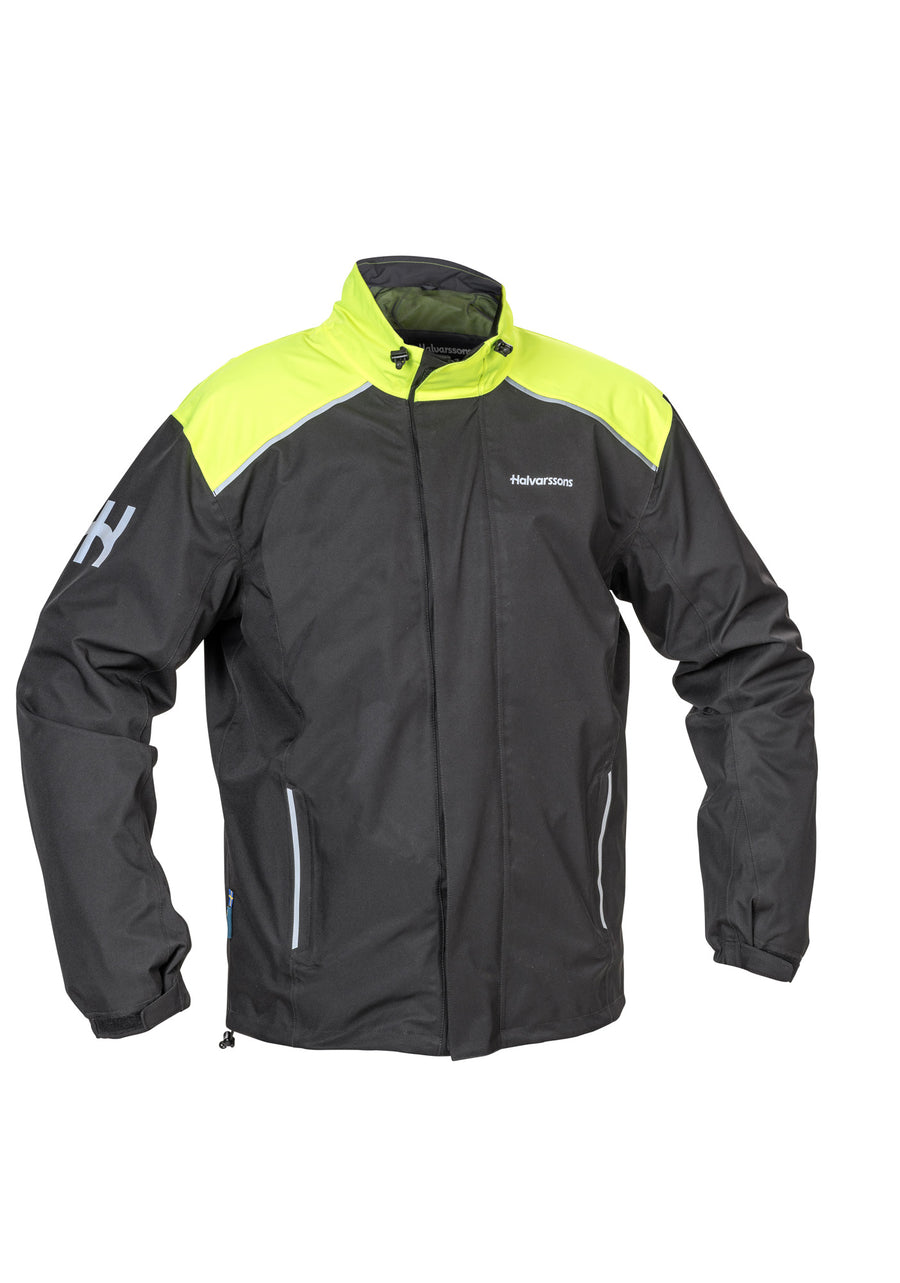
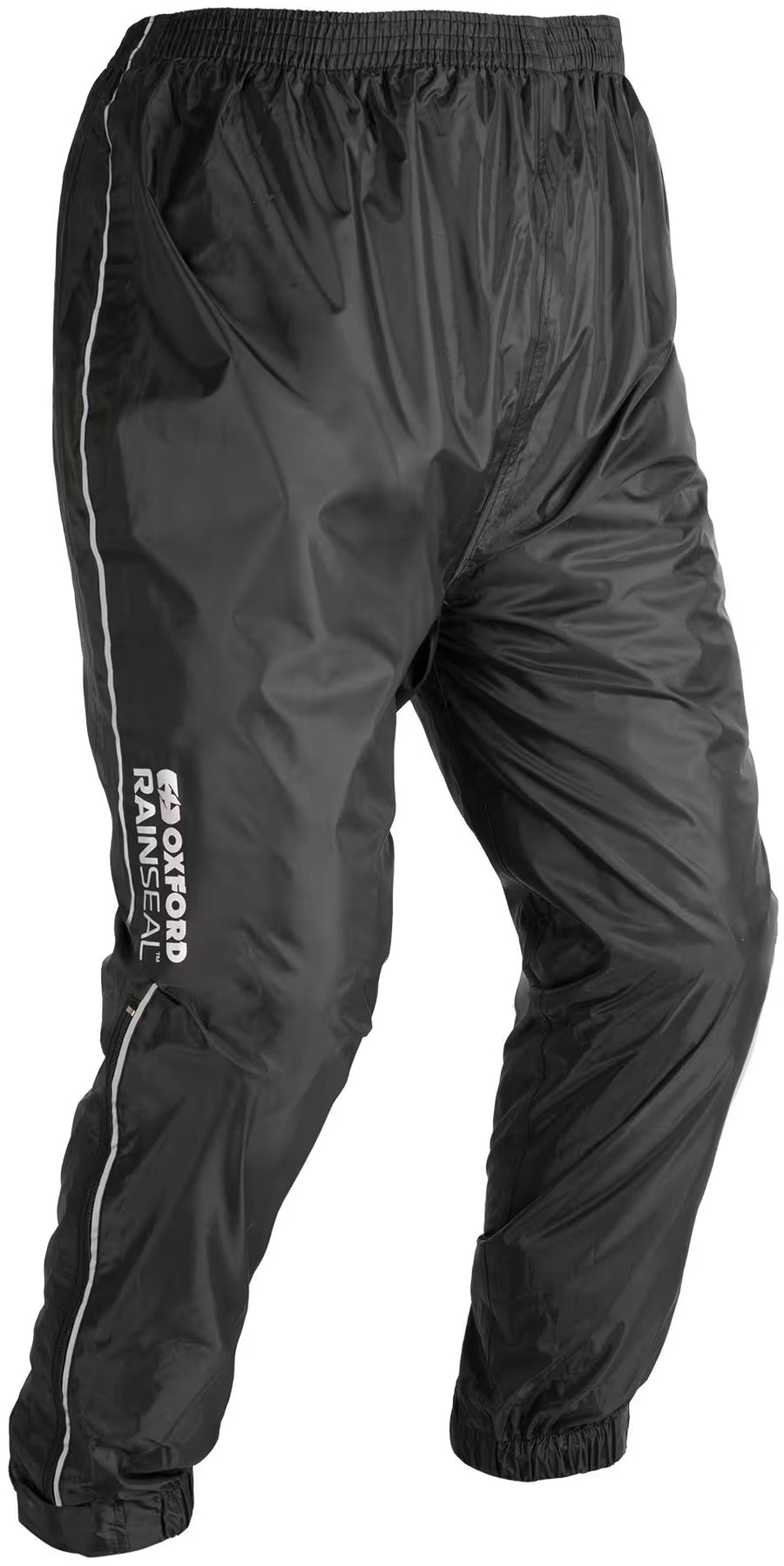
In autumn, fluo yellow is not fashion but safety: in rain and low light, being seen is the cheapest protection you can buy.

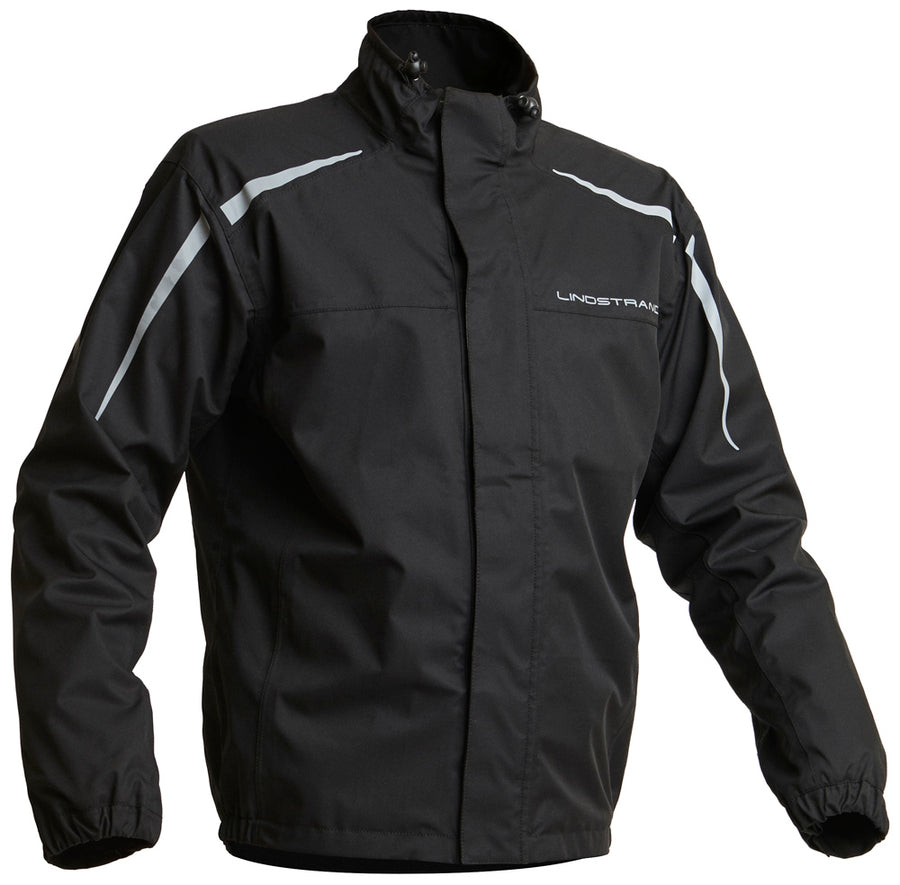
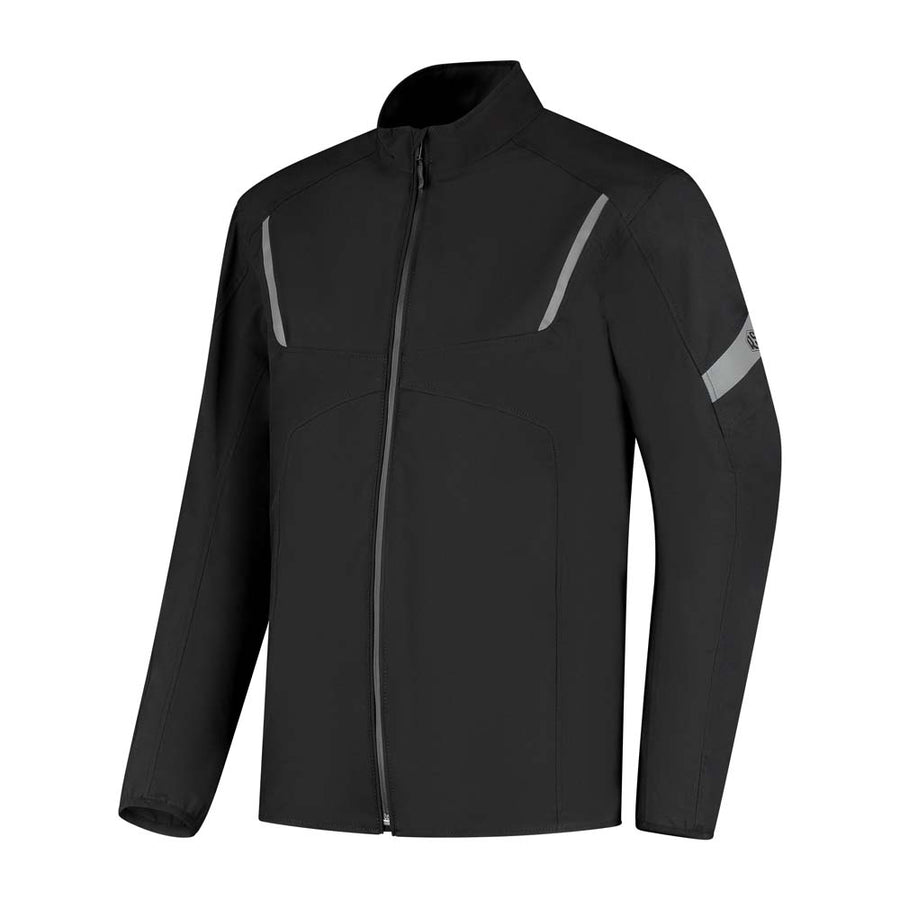
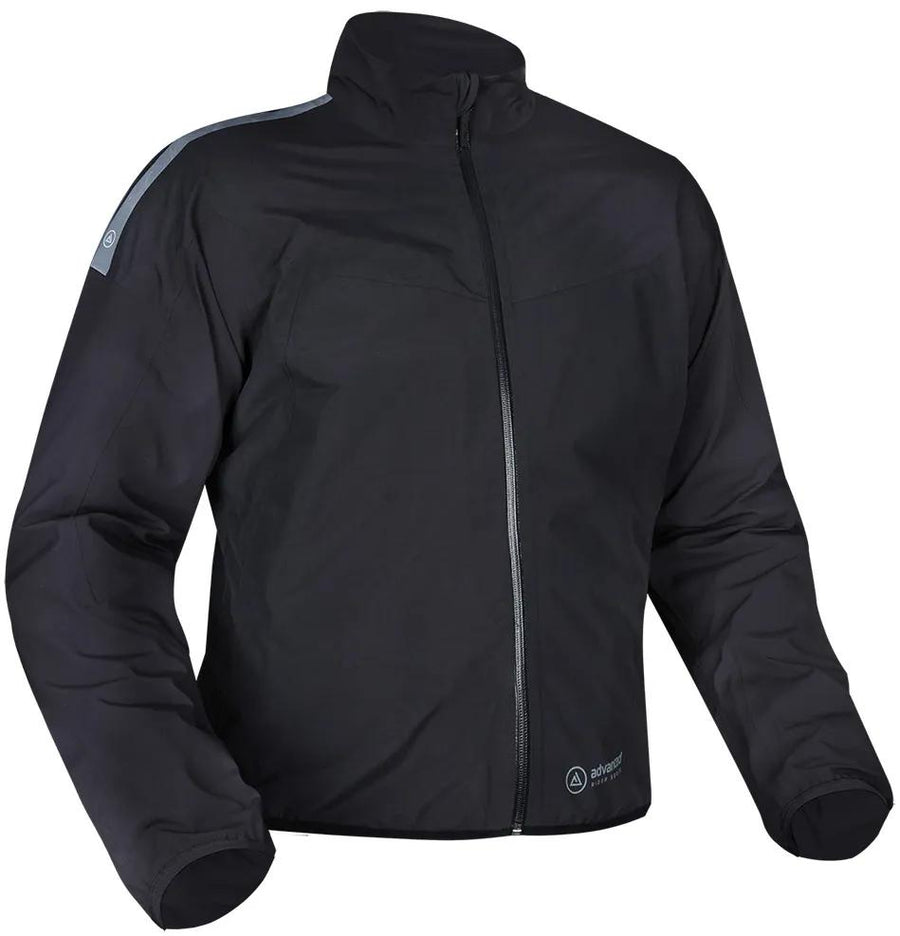
The Nico is a separate 10K rain jacket that folds down small, handy if you mostly ride short distances.

Where water actually gets in
Almost nobody gets wet through the fabric itself. It comes in through the openings, and those are predictable per body part.
The neck
Water runs off your helmet and down over your collar. A collar that does not close tightly is the most common leak. A simple neck warmer often solves it.
The cuffs
Rain runs down your forearm towards your hand. The rule is simple: short gloves go under the sleeve, long gloves go over it. Do it the other way round and you collect water like a gutter.
The seat area and crotch
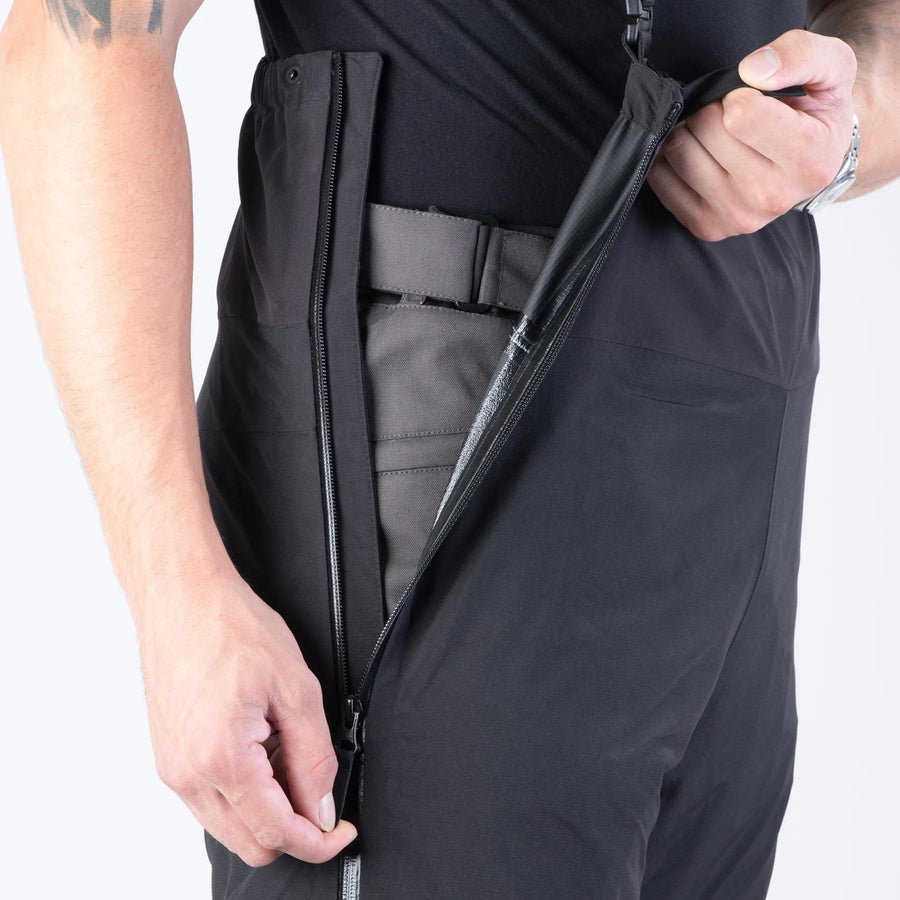
Here your weight pushes water through the fabric. This is exactly where a low water column gives up first, and why trousers rated 20K or higher make the difference on longer rides.
The boot shaft
Water running down your trouser leg and into your boot. Your trouser leg belongs over the boot, never inside it. A waterproof boot that fills from the top stays wet for the rest of the day.
Boots: where Gore-Tex really pays off
With boots you notice the difference between waterproof and water repellent faster than anywhere else. Wet feet make a ride miserable and cold, and boots dry slowly.
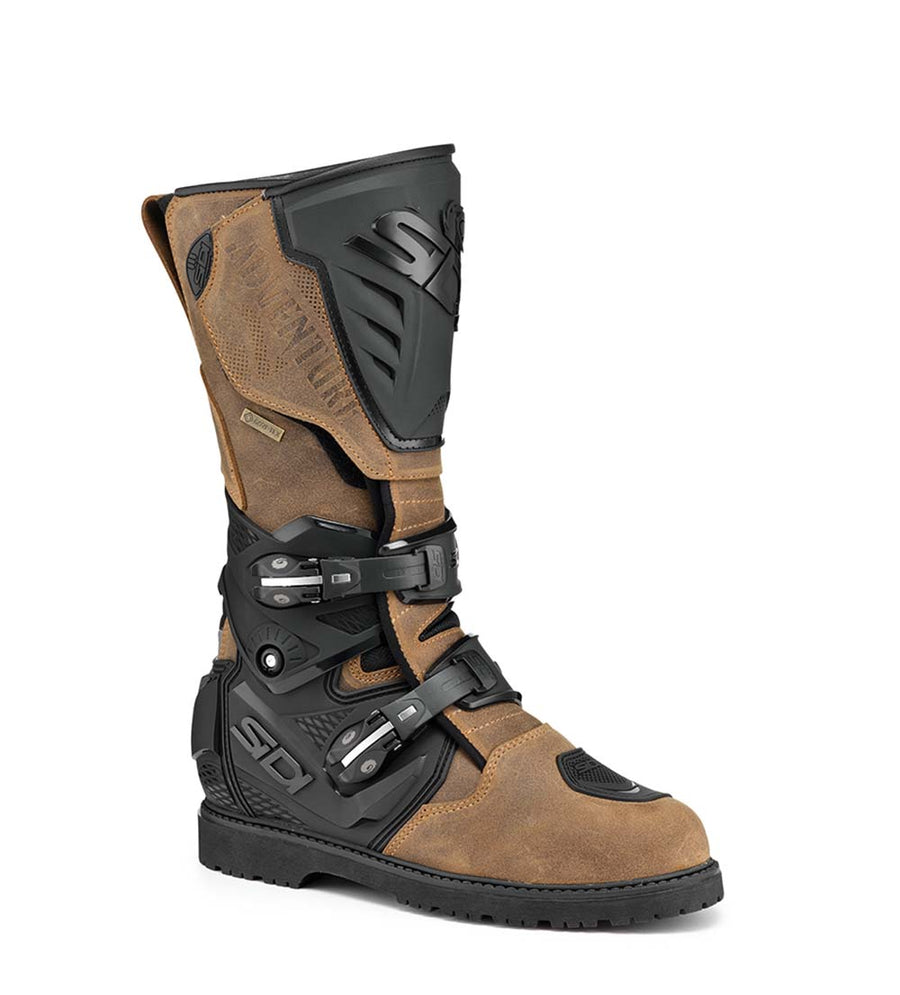
The Sidi Adventure 2 Gore-Tex is the classic in this category: tall shaft, Gore-Tex membrane, at home on tarmac and gravel.
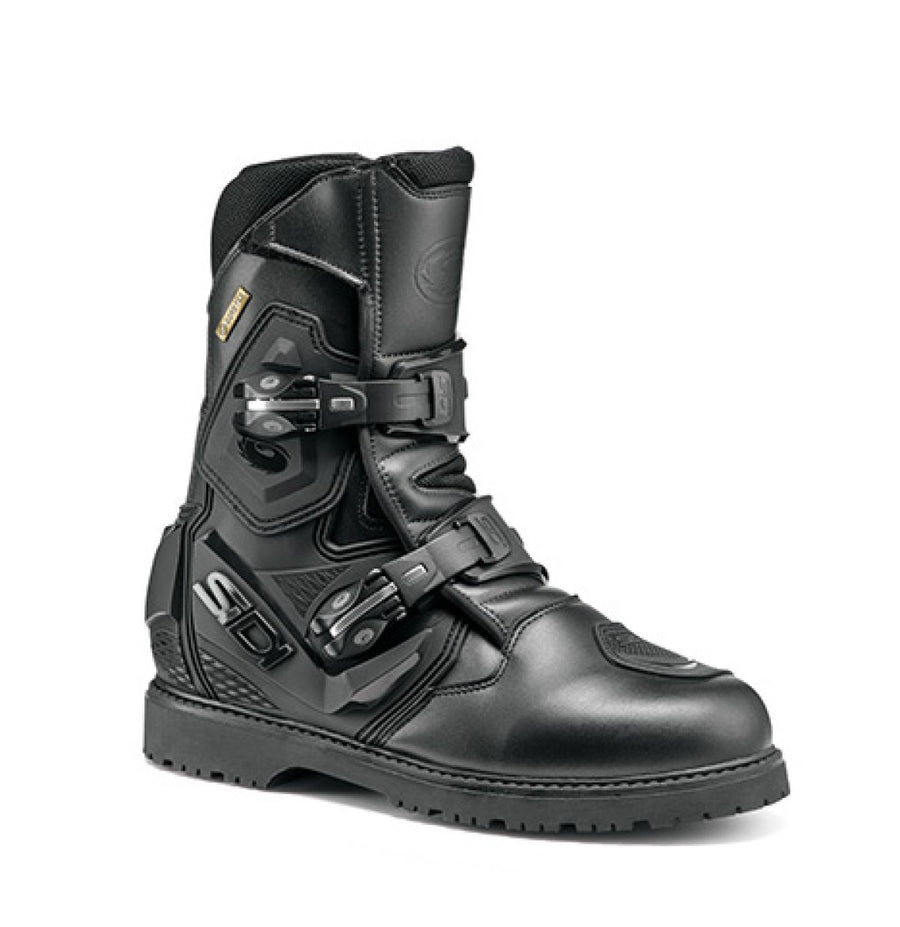
The Mid Adventure 2 is the same idea with a lower shaft, nicer if you put a foot down often or want to walk in them.

The Leatt ADV HydraDri 7.5 sits in the same segment with an in-house membrane, usually at a sharper price.
Gloves: the hardest part
Hands are hard to keep dry because a glove has to stay thin for feel on the controls. A waterproof membrane makes it thicker and stiffer, so there is always a trade-off.
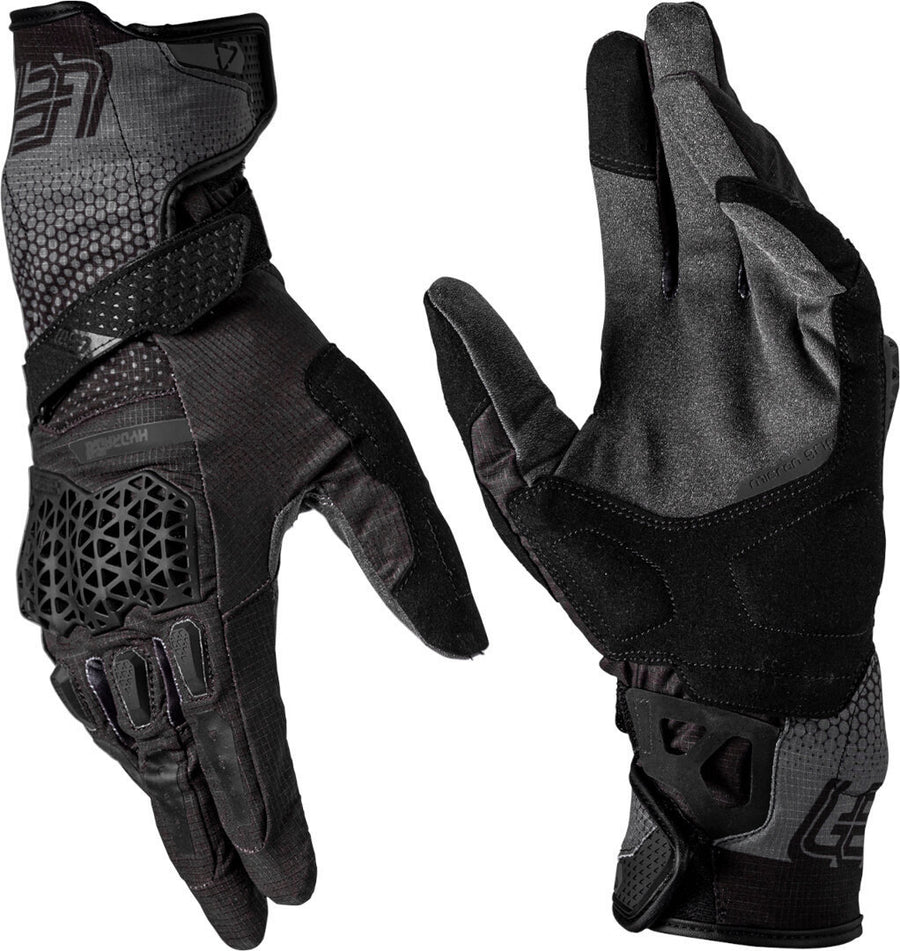
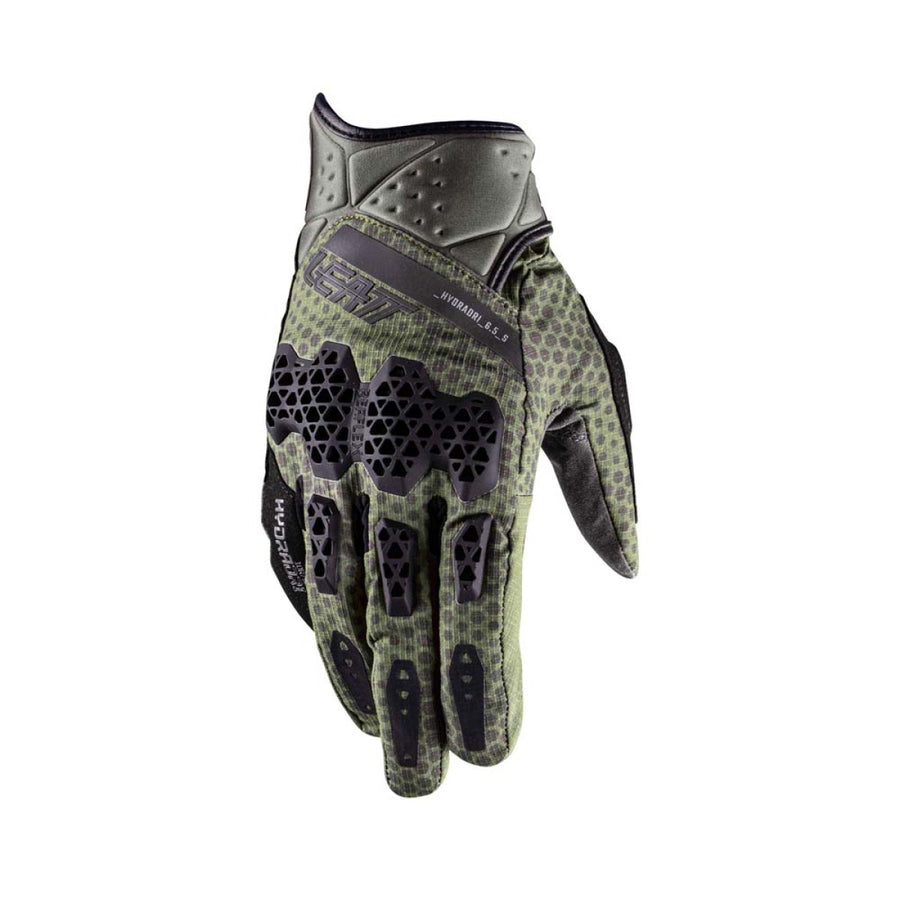
The 6.5 Short is shorter and fits under your sleeve, while the 5.5 goes over the sleeve. Choose deliberately, because that decides whether water on your forearm runs outward or inward.

For cold and wet at the same time, an insulated glove with a membrane is the safer choice over a thin summer glove with a rain cover pulled over it.
Care: why your jacket starts leaking after two years
Usually the membrane is not broken. What is worn out is the water repellent layer on the outer fabric. Once it saturates, the fabric soaks up water, the jacket turns heavy and cold and breathability stops. It feels like leaking, but it is not.
- Wash the gear with a product made for technical fabrics, not with normal detergent or fabric softener. Softener blocks the pores of the membrane.
- Close all zips and velcro before washing so they do not damage the fabric.
- Re-treat the outer fabric afterwards with a proofing product.
- Heat activates most proofing products. Follow the instructions on the packaging of the product you use.
- Store gear dry and hanging. Folding it away while damp creates creases where the coating wears through first.
Do this once or twice a season, depending on how much you ride. It saves you a new jacket.
What to choose, per type of rider
| You ride | Recommendation |
|---|---|
| Commuting, short distances | A 10K jacket or a good rain suit over your normal clothes, plus waterproof gloves |
| Weekend rides, changeable weather | Jacket with a built-in membrane from 20K, trousers in the same class |
| Summer rider who sometimes gets caught out | Vented jacket with a separate rain layer, compact rain suit in the luggage |
| Long trips and adventure | 30K or higher, Gore-Tex boots, long waterproof gloves |
Frequently asked questions
Is 10K enough to stay dry?
For short rides and ordinary showers, yes. In hours of steady rain at speed, water is pushed through under pressure, especially at the shoulders and seat. Then you want 20K or higher.
Is Gore-Tex better than HydraDri or another brand membrane?
Gore-Tex brings control over the complete garment and the manufacturer's own dryness promise. Brand membranes reach comparable stated ratings for less money. For a jacket or boot that has to last years, the guarantee weighs heavier. For focused use, a brand membrane is often the better value.
Why do I get wet inside while my jacket is waterproof?
That is usually condensation. If breathability falls short or the outer fabric is saturated, your own sweat cannot escape. A base layer that moves moisture helps more here than a more expensive jacket.
Can I make an old jacket waterproof again?
Often yes. Washing with a technical fabric product and re-proofing restores the water repellent layer. If the membrane itself is damaged or the seam tape has lifted, that is the end of it.
Waterproof boots or boot covers?
Waterproof boots are more comfortable and safer, because covers can slip and snag. Covers are an emergency fix, not a base.
Trouser leg inside or over the boot?
Over the boot. Tucked in, every drop running down your leg goes straight into the boot.
Not sure about sizing?
Waterproof gear only works if it closes properly. Too loose lets water in at the neck and cuffs, too tight pulls the seams open. Use our size advice or contact us if you are stuck between two sizes or two models. We are happy to think along before you order.