


Short answer: a full-face helmet offers the most protection and suits most riders. A modular helmet is handy if you stop often or wear glasses. An adventure helmet is made for riding on both tarmac and unpaved roads. An open-face helmet is airy and suits relaxed riding in the city or on a classic bike. A motocross helmet is for off-road only, worn with goggles. Whichever type you choose, fit is the most important thing.
Your helmet is the most important piece of your gear. Still, choosing one isn't easy, with so many types, brands and price ranges. In this guide we explain the differences, show a few strong choices per type and cover how to find the right size.
The five types of motorcycle helmets at a glance
| Type | Protection | Best for |
|---|---|---|
| Full-face helmet | Fully enclosed | Sport, touring and daily riding |
| Modular helmet | Enclosed, chin bar flips up | Touring riders, glasses wearers, frequent stops |
| Adventure helmet | Enclosed, with peak and large visor | Tarmac and unpaved roads, long trips |
| Open-face helmet | Open face | City, classic bikes, short rides |
| Motocross helmet | Enclosed, no visor | Off-road and motocross, with goggles |
Full-face helmet: the safe all-rounder
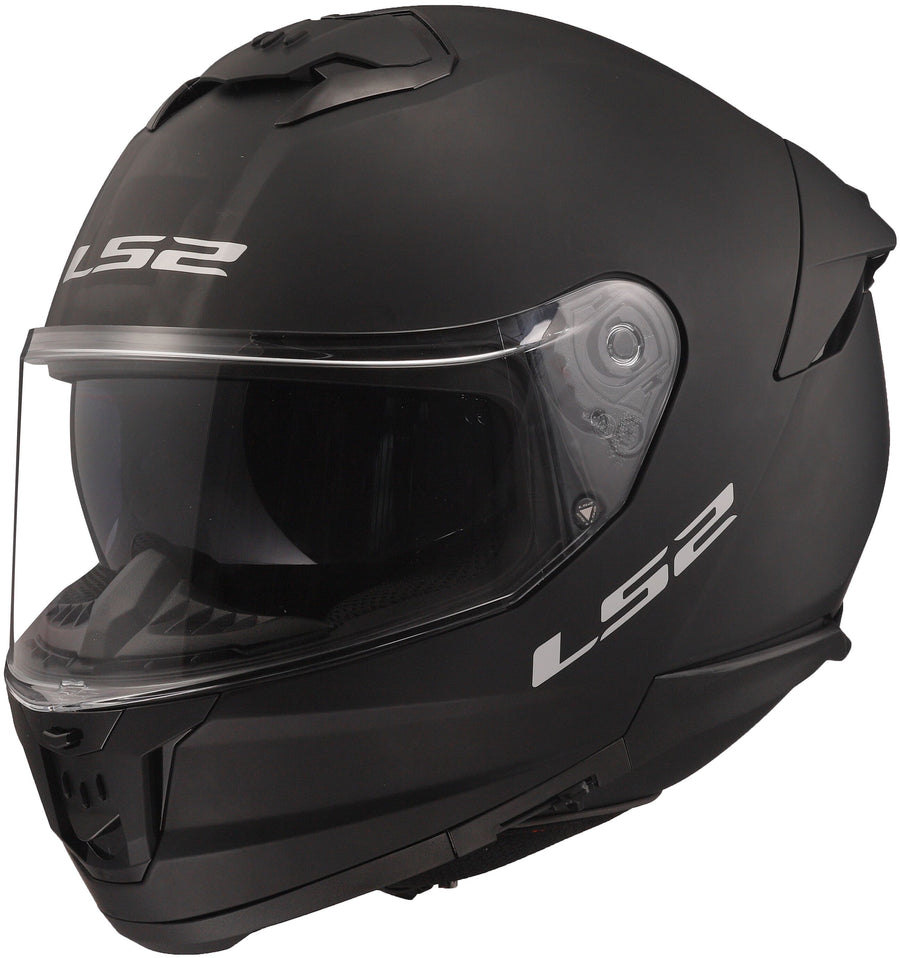
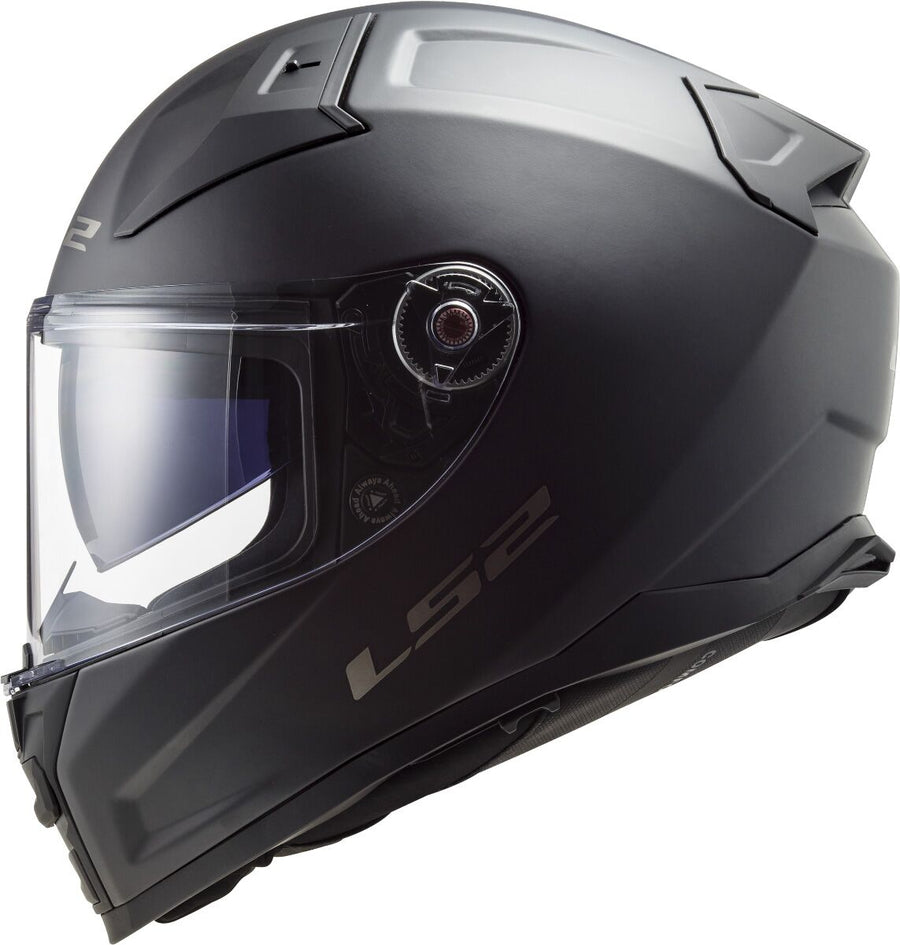
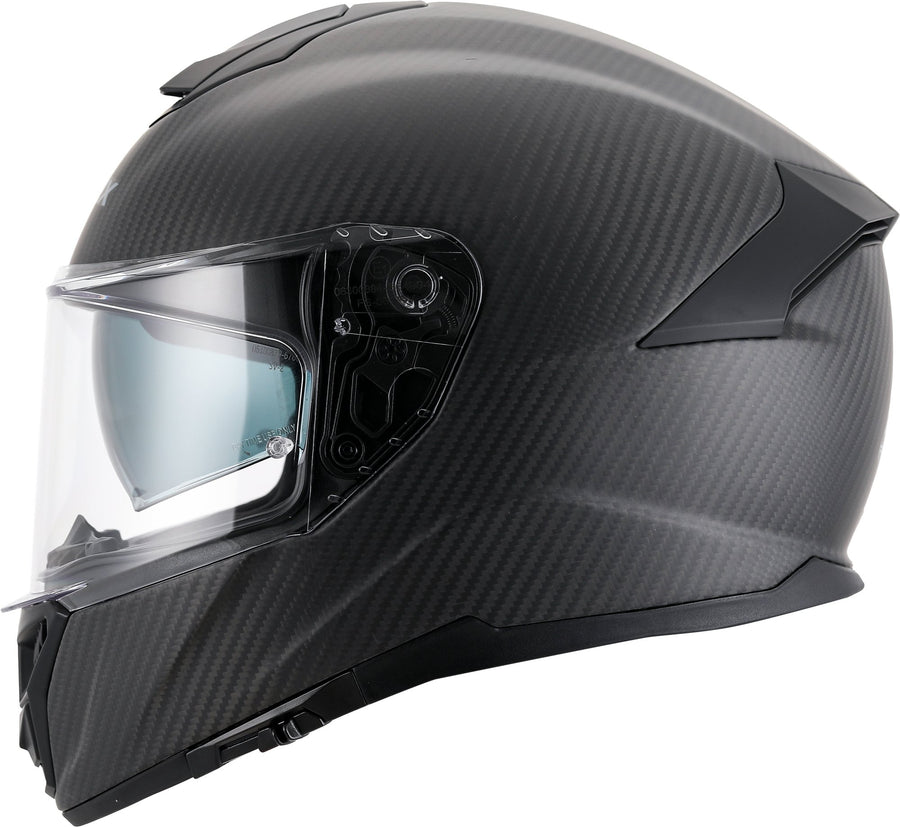
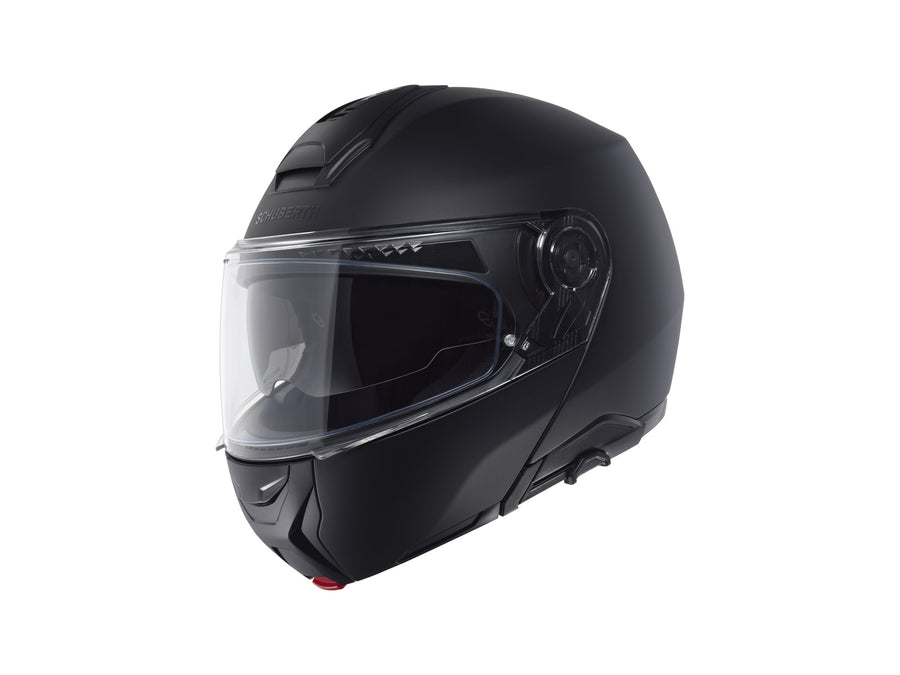
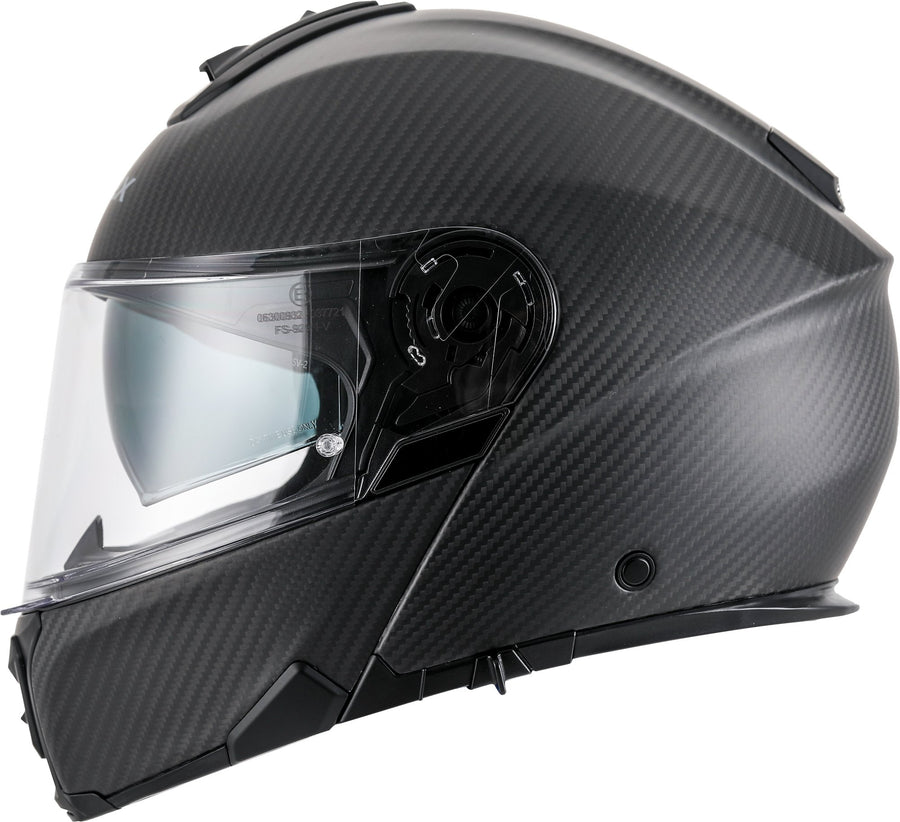
A full-face helmet fully encloses your head and chin. That gives the most protection and it is often the quietest too. It suits almost any bike and riding style. The LS2 FF808 Stream II is a strong, affordable entry-level choice. If you want less weight, the carbon versions from LS2 and Apex are interesting. The Schuberth Concept is a premium pick for those who want the best.
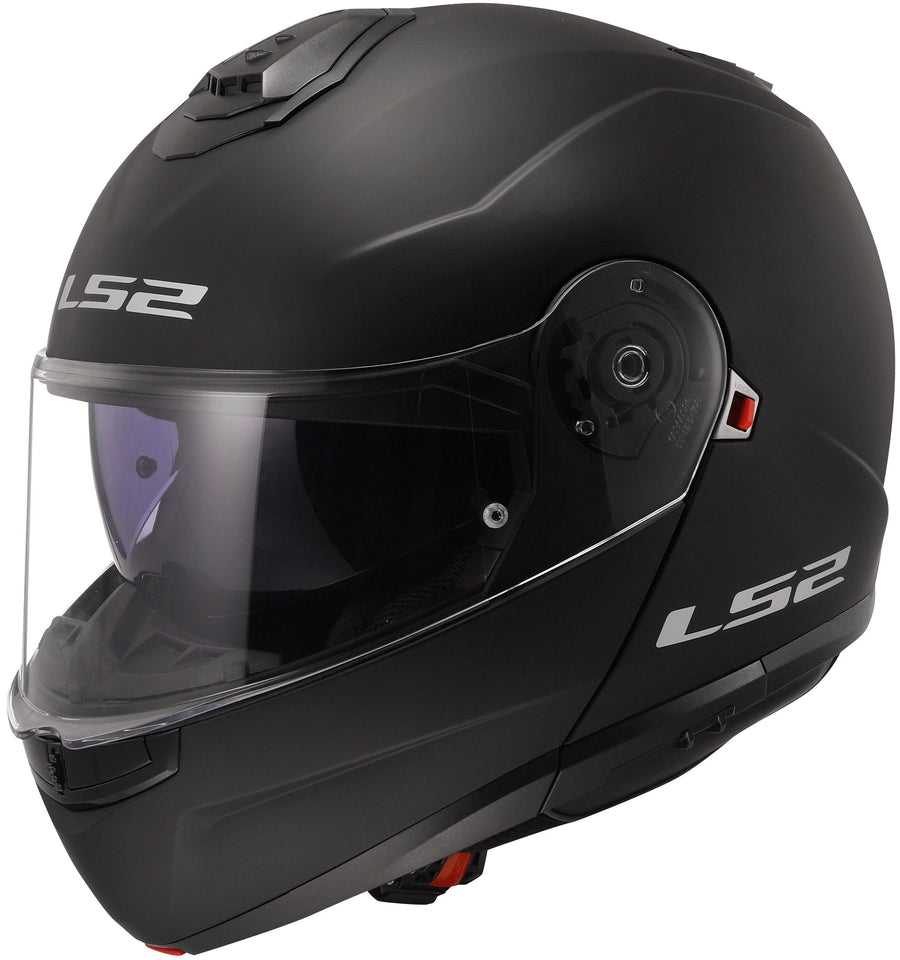
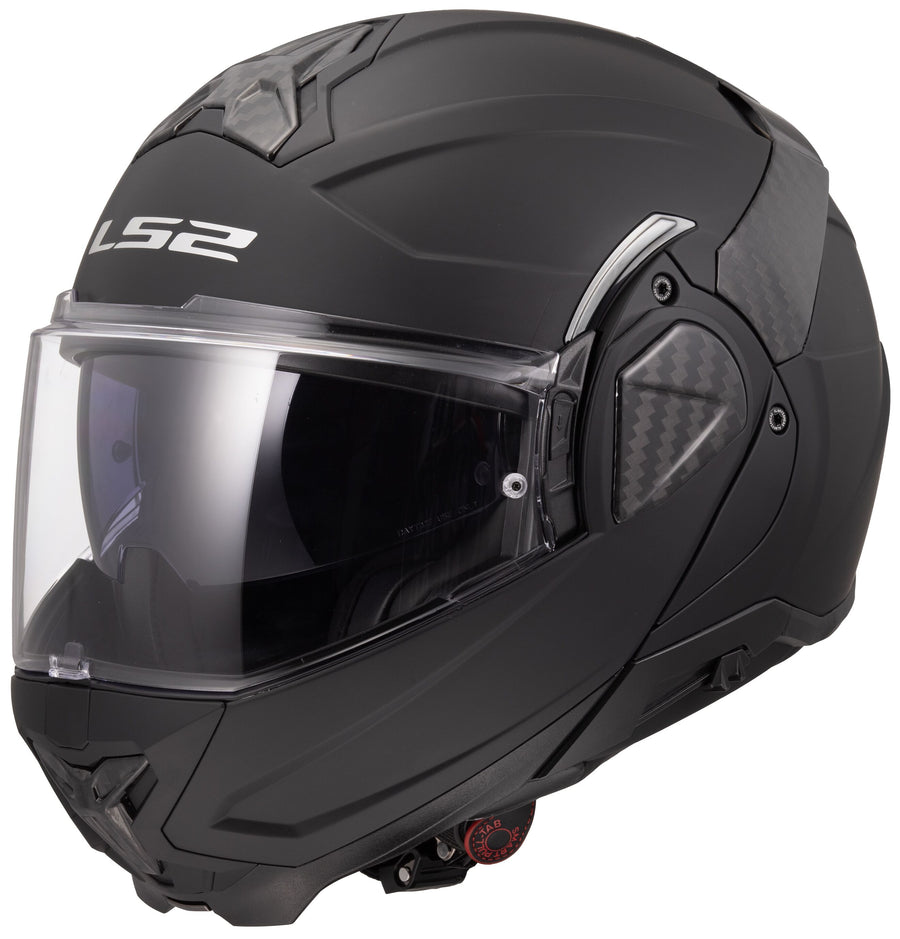
Modular helmet: handy at every stop
With a modular helmet you flip the chin bar up. Handy when refuelling, when you want to say something quickly or if you wear glasses. If you also want to be allowed to ride with the chin bar up, check whether the helmet has dual homologation (P/J). Modular helmets are a bit heavier than full-face helmets.
Adventure helmet: for tarmac and unpaved roads
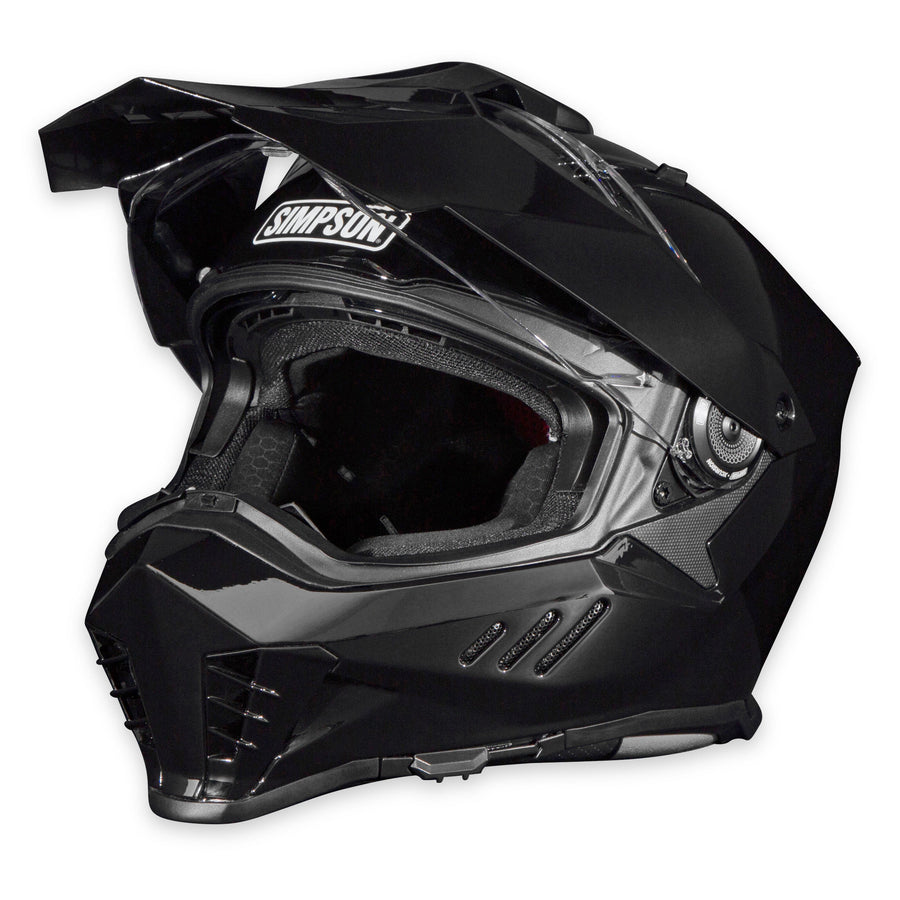
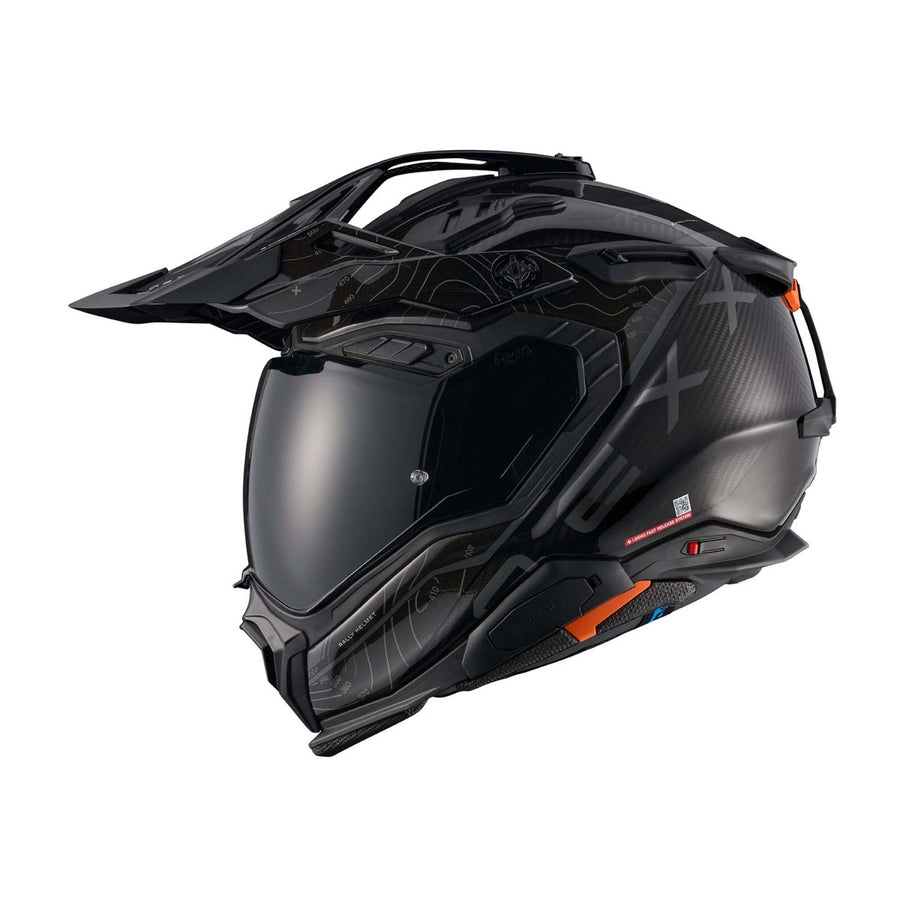
An adventure helmet combines the peak and roomy chin section of a motocross helmet with the visor of a street helmet. The peak keeps out sun and dirt, and the large visor gives a wide view. Ideal for long trips and rides where you also take unpaved stretches. Want to know more? Read our complete guide to adventure helmets.

Open-face helmet: airy and classic
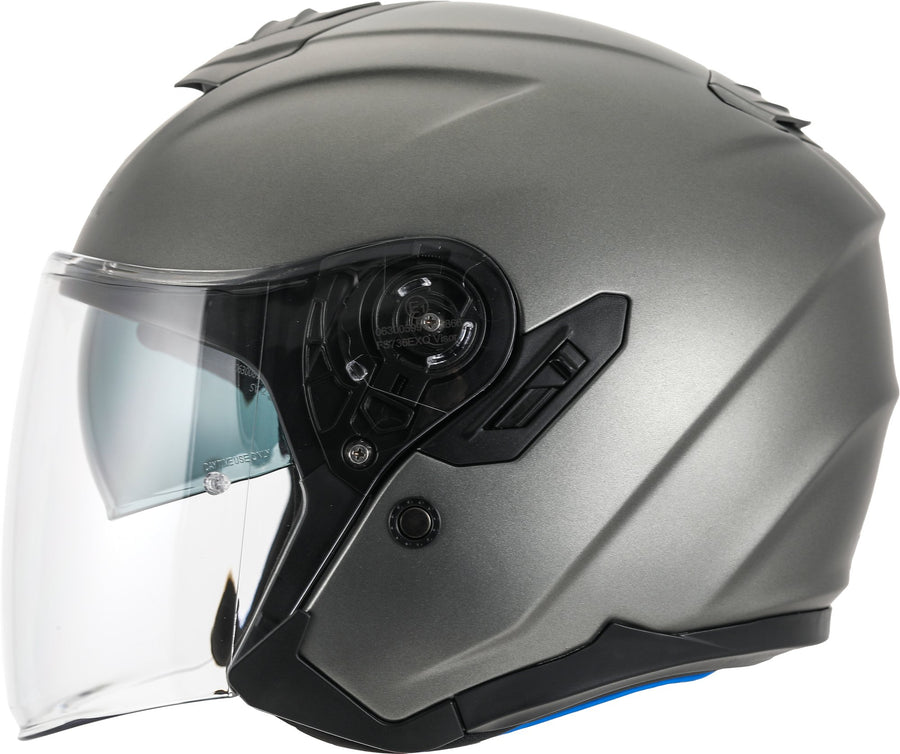
An open-face helmet leaves your face free. That feels free and airy, and suits a classic bike or short rides in the city. Do keep in mind that your chin and face are less protected than with a closed helmet.
Motocross helmet: off-road only
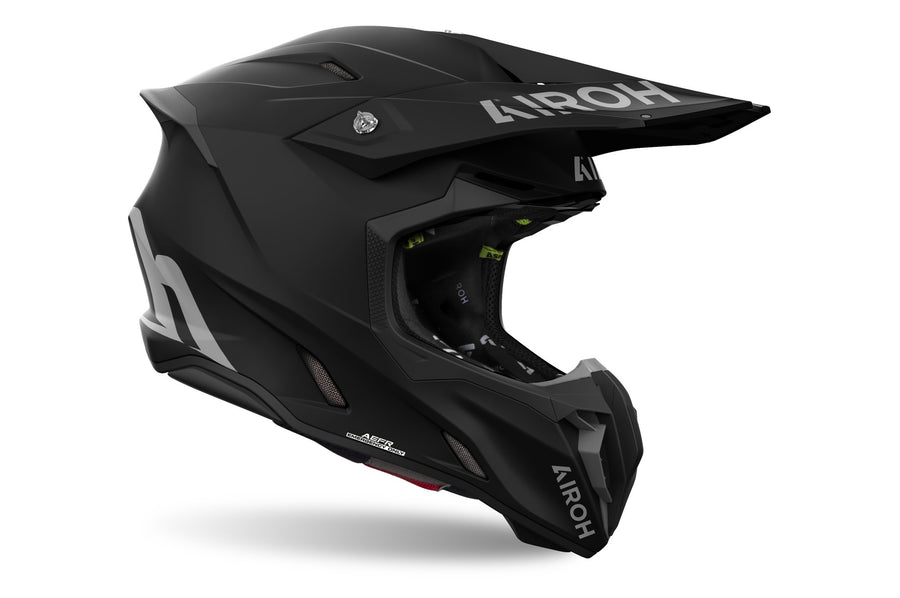
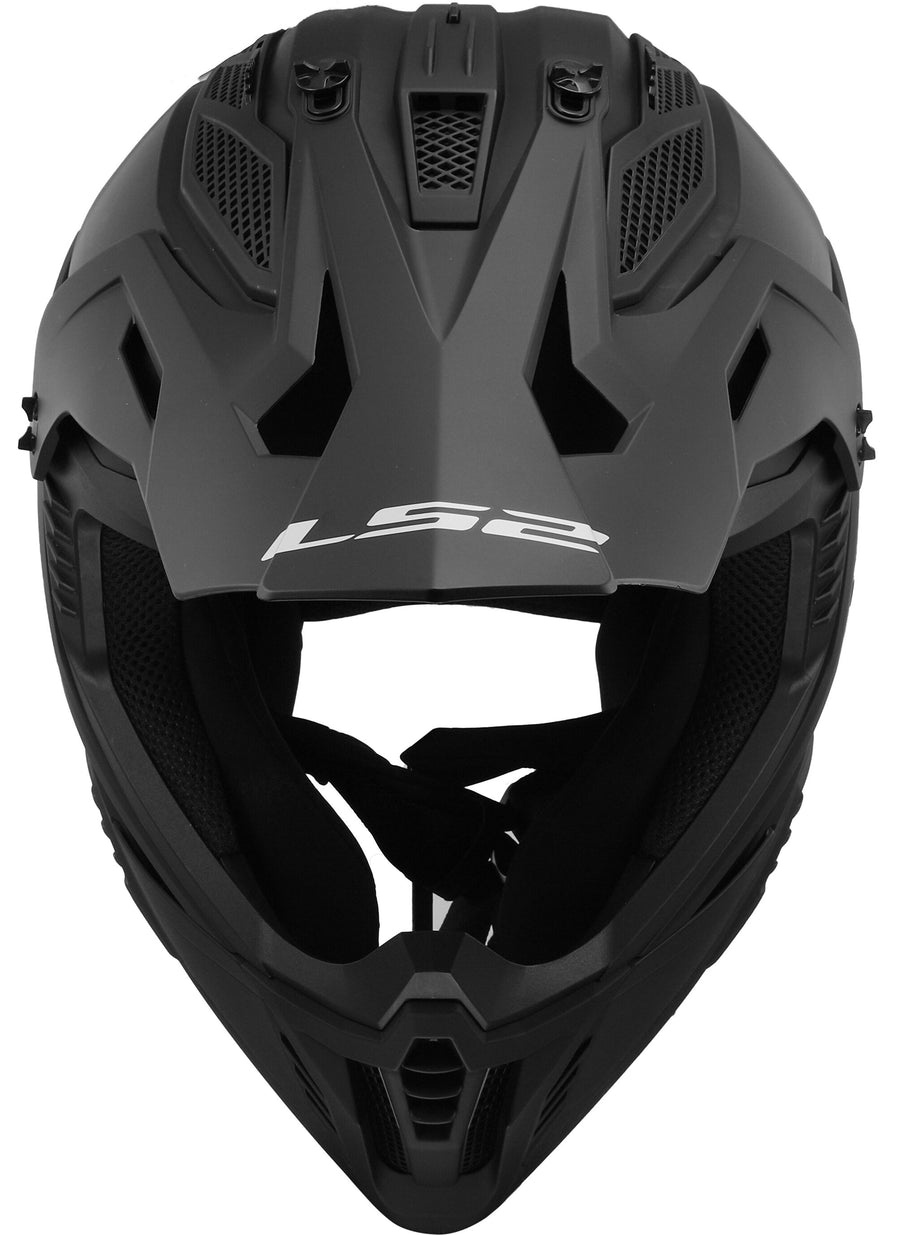
A motocross helmet has a long chin section, a peak and no visor. You wear it with goggles. Made for off-road and motocross, where you need a lot of airflow and often ride standing up.
The right size: how to measure your head
- Measure your head circumference. Place a soft tape measure around your head, about a finger above your eyebrows and over the widest part of the back of your head.
- Check the size chart. Every brand has its own size chart. If you fall between two sizes, try both if you can.
- Put the helmet on and fasten it. A new helmet should fit snugly, with light pressure on your cheeks. It should not squeeze your forehead.
- Do the rotation test. Hold the helmet and try to turn it. If the helmet rotates loosely over your head, it is too big.
- Keep it on for fifteen minutes. Pressure points only show after a few minutes. A helmet that hurts after fifteen minutes won't get better on the road.
The inner lining of a helmet gives a little over time. A helmet that feels just slightly roomy when you try it on will therefore become too loose later. If you're unsure about your size, check our size advice page or get in touch with us.
What else should you look for?
- Certification: look for the ECE 22.06 label, the latest European helmet standard. Read more in our article on ECE 22.06.
- Weight: a lighter helmet is more comfortable on long rides. Carbon helmets are often the lightest.
- Visor: a Pinlock-ready visor prevents fogging. A sun visor is handy when the sun is low.
- Intercom: if you want to use an intercom, check whether there is room for speakers in the ear pockets. Or choose a helmet with a built-in intercom, such as the Sena Outride.
- Replacement: after a fall or impact you must replace a helmet, even if you can't see any damage. Many manufacturers also advise replacing a helmet after a number of years of use.
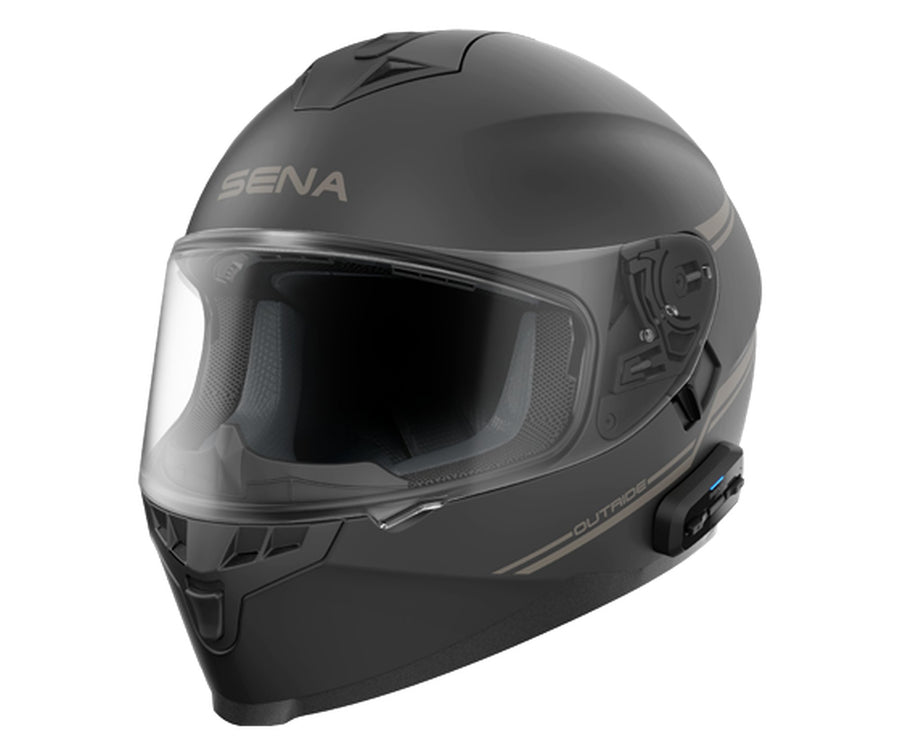
Also read our intercom guide if you want to fit a separate intercom to your helmet.
Quick pick: which helmet suits you?
| You mainly ride... | Choose |
|---|---|
| Sporty or on the motorway | Full-face helmet |
| Long tours, with glasses or many stops | Modular helmet |
| On trips, including unpaved roads | Adventure helmet |
| In the city or on a classic bike | Open-face helmet |
| Off-road or motocross | Motocross helmet with goggles |
Frequently asked questions
What is the safest motorcycle helmet?
A closed helmet, such as a full-face helmet, protects your head and chin the most. More important than the type, though, is that the helmet fits well and has a valid certification.
How do I know if my helmet fits well?
It sits snugly, presses lightly on your cheeks and doesn't rotate loosely over your head. Keep it on for fifteen minutes before you decide.
Can I ride with a modular helmet with the chin bar open?
Only if the helmet has dual homologation, marked P/J. Otherwise the chin bar must be closed while riding.
How long does a motorcycle helmet last?
After a fall or impact you always replace it. The materials also age. Many manufacturers advise replacing a helmet after a number of years, so check the manual for the advice for your helmet.
What does a good motorcycle helmet cost?
A good, certified helmet is available from around 100 euros. More expensive helmets are often lighter, quieter and more comfortable on long rides.
Need help choosing?
Tell us what kind of rider you are, which bike you ride and your head circumference, and we'll help you pick. You can reach us via the contact page.