

You don't buy an adventure helmet every month. Most riders keep one helmet for five years or longer, yet just as many wrong purchases are made as good choices. Usually because someone focuses on the price or color instead of the four things that really matter: the certification, the fit, visibility, and weight.
This guide is about precisely these four points. No marketing jargon, but the questions you need to ask yourself before ordering.
What makes a helmet an adventure helmet?
An adventure helmet is an intermediary form. It combines the chin and field of vision of an off-road helmet with the comfort and roadworthiness of a full-face helmet. You recognize it by the peak above the visor and the often elongated chin bar. This is not a fashion statement; it serves a function.
The peak blocks low-lying sun and splashing dirt when you go off-road. The more spacious chin bar provides air when you're slowly slogging through sand or gravel and breathing harder. And the wide visor gives you the overview you need when steering through difficult terrain while standing on the footpegs.
In short: if you ride purely on the road, a full-face helmet is more logical. If you ride purely off-road, you'll want a true off-road helmet with separate goggles. If you're somewhere in between, which applies to most adventure riders, then the adventure helmet is made for precisely your style of riding.
Certification: why ECE 22.06 is the only thing that matters
This is the area where you should not compromise. Since 2024, only helmets that comply with the ECE 22.06 standard may be sold in Europe. This standard replaced the older 22.05 and tests more rigorously: at more impact points, at different speeds, and on how the helmet absorbs rotational forces. The latter is important because it is precisely this rotational movement during a fall that causes the most severe brain injuries.
Always check that the helmet carries a valid ECE 22.06 label. If you come across a strikingly cheap helmet online, double-check. Remaining stock with the old 22.05 certification still surfaces, and these can no longer be sold new. All our helmets carry the current certification; that's not a sales argument but a minimum requirement.
The four things that determine your fit
A helmet that doesn't fit won't protect you and won't feel comfortable to ride with. These are the points to consider.
Head shape. Not every head is round. Some people have an elongated head, others a wider, rounder shape. Brands build their helmets on different basic shapes. If a helmet that is correct according to the size chart feels tight on your forehead or loose on the sides, you're probably looking at the wrong head shape and not the wrong size.
Measuring the correct size. Measure the circumference of your head with a measuring tape, approximately one finger above your eyebrows, at the widest point. Do this twice and use the largest measurement. If you're torn between two sizes, choose the smallest one that still comfortably slides over your head, as the lining foam will compress slightly after a few rides.
Cheek pads. A new helmet should fit snugly around your cheeks, almost too snugly. If you can easily rotate the helmet back and forth or if it slides forward when you bend your head, it's too loose. With most quality helmets, you can replace the cheek pads with a thinner or thicker set, allowing you to fine-tune the fit without ordering a different size.
The roll test. Put on the helmet, fasten the chin strap, and try to roll it off your head from back to front. If you can do that, it's too big, period. A helmet that flies off in a crash is an expensive headband.
Don't want to do this by guesswork? Then use our size guide, which will instantly calculate the correct size per brand based on your head circumference. That saves you a return.
Pinlock: the difference between riding on and stopping
Of all the details on a helmet, this is the one that is most often overlooked and most missed. A Pinlock is a second visor layer that clips to the inside and prevents fogging. If you ride early in the morning, in the rain, or simply in November in the Netherlands, the difference is enormous.
Without Pinlock, your visor fogs up at low speeds and when stationary, precisely when you need your vision most: at an intersection, in traffic, during a difficult passage. With Pinlock, your vision remains clear. When purchasing, pay attention to whether the helmet is Pinlock-ready and whether the lens is included or needs to be ordered separately. A helmet that doesn't include it isn't necessarily worse, but factor that cost into your comparison.
Peak, ventilation, and weight: the rest of the picture
The peak. Choose a helmet with a peak that you can adjust or remove. On the highway, a large peak catches wind and makes your head pull. Off-road, you want to set it low to block the sun. A good adventure helmet lets you make that choice.
Ventilation. Adventure riding means alternating between fast riding and slow slogging. You want air intakes that you can open and close with gloves on, and good airflow to the back. You only notice poor ventilation on a hot day in the sand, and then it's too late.
Weight. A difference of a few hundred grams isn't noticeable in the shop, but it is after three hours of riding. Lighter helmets are often built with a shell of composite fibers or carbon instead of polycarbonate. That costs more, but your neck will thank you on a long day. If you mostly do short rides, this is less important.
Which brand suits you?
We deliberately don't carry twenty brands, but the brands whose construction we understand.
LS2 offers the most helmet for your money. You get features that you would only find much higher in the range with more expensive brands, from a good peak to Pinlock preparation, at a sharp price. For the serious adventure rider who doesn't want to pay top dollar, this is often the smartest starting point. The MX701 Explorer is the model most riders end up with from us.
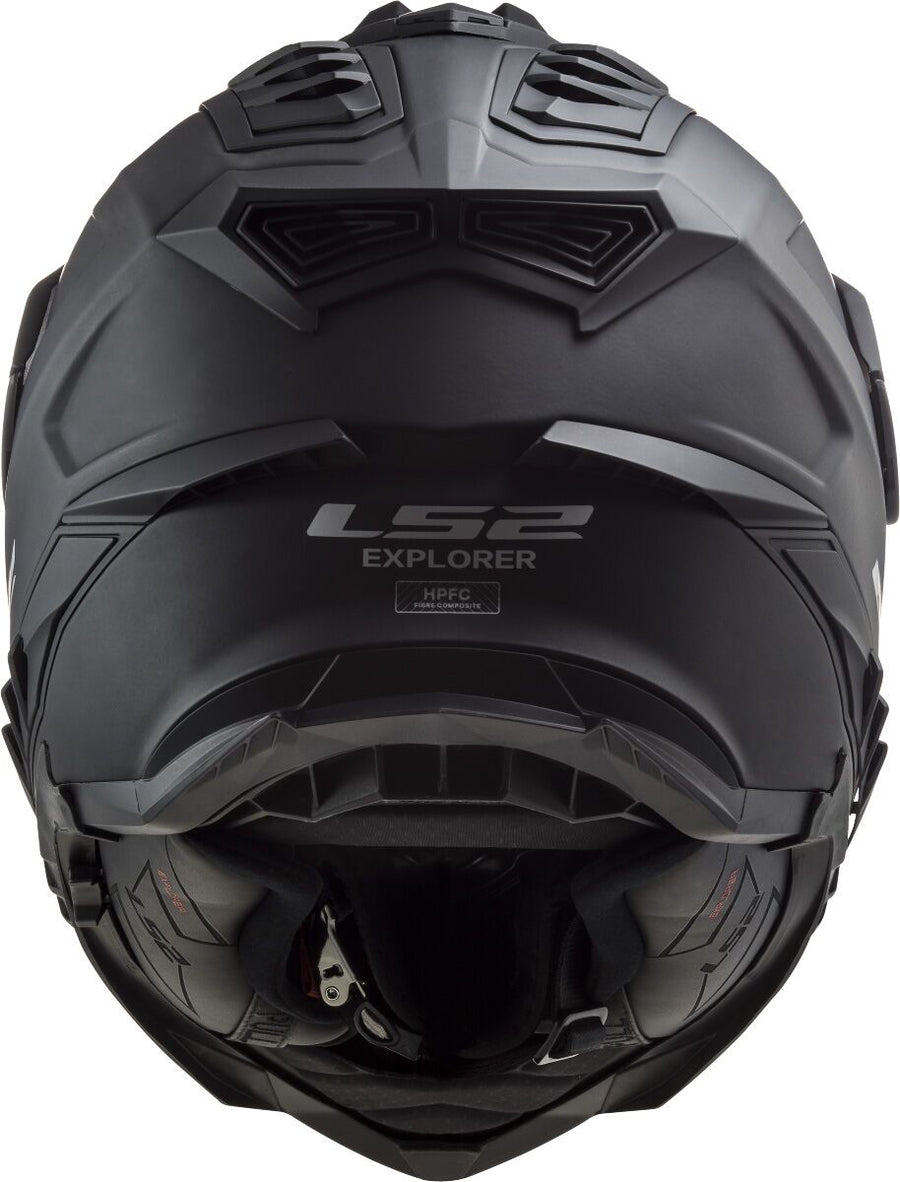
€265,95 was €299,00 · Currently sold out
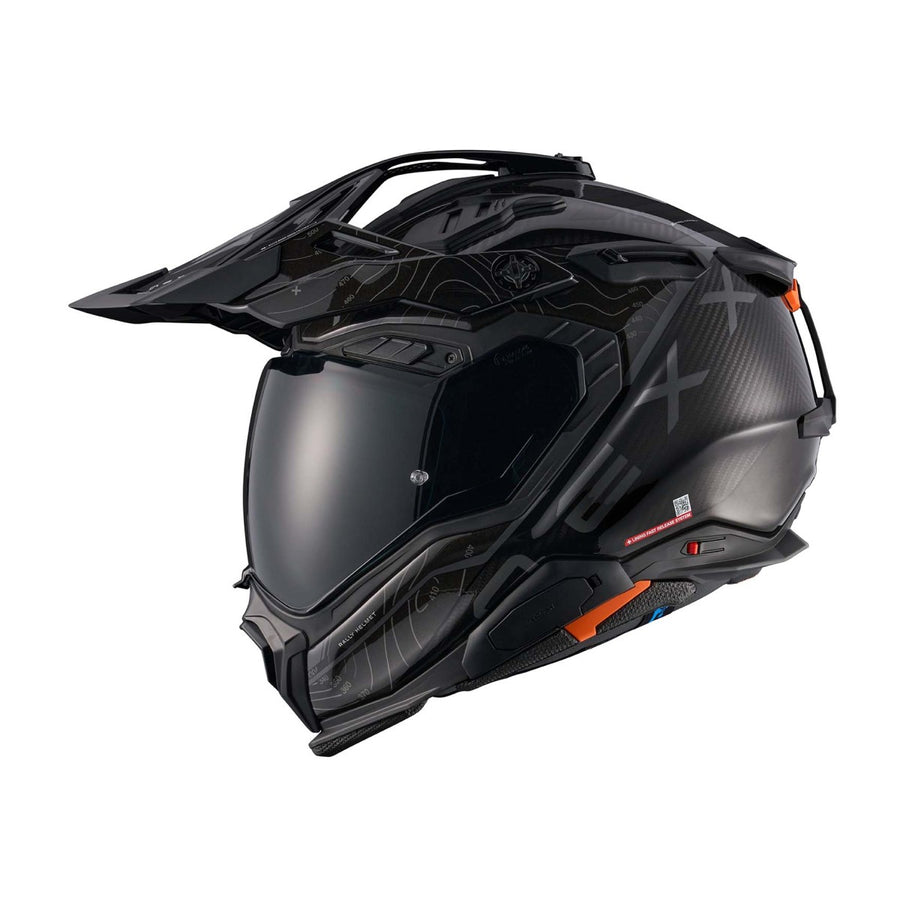
NEXX is in the premium segment. Lighter shells, refined finish, and well-thought-out details for those who want to feel the difference on a long day and are willing to pay for it.
Leatt comes from the off-road world, and it shows. The ADV line is built around protection and ventilation, with safety technology developed from motocross and enduro. If you ride a lot off-road, this is a brand to take seriously. The ADV 8.5 comes with a photochromic visor that automatically darkens.

If you're unsure between brands, feel free to email business@wheelswork.com. We'd rather honestly tell you which helmet suits your riding than sell you the most expensive one.
Frequently Asked Questions
What is the difference between an adventure helmet and an off-road helmet? An off-road helmet is built purely for off-road, is light and well-ventilated, but has no visor: you wear separate goggles with it. An adventure helmet does have a built-in visor and is more comfortable on the road, while maintaining enough off-road capability. If you ride mixed terrain, the adventure helmet is the logical choice.
Can I wear an adventure helmet on the highway? Yes. Most adventure helmets are designed for mixed use. However, the peak can catch some wind at high speeds. Therefore, choose a helmet with an adjustable or removable peak, or set it to the lowest position on the road.
Do I really need a Pinlock? In the Dutch climate: yes. Without Pinlock, your visor fogs up at low speeds and in the rain, precisely when you need your vision. It's one of the cheapest upgrades with the biggest impact on your comfort and safety.
How do I know my helmet size? Measure the circumference of your head one finger above your eyebrows at the widest point. Compare that measurement with the brand's chart, as sizes vary by manufacturer. Our size guide calculates the correct size per brand for you.
How long does a motorcycle helmet last? Expect about five years with normal use, or sooner if the helmet has suffered a significant impact. The foam in the helmet hardens over the years and then protects less effectively, even if the exterior still looks neat. If your helmet has ever fallen with your head in it, always replace it.
In short
Buying a good adventure helmet revolves around four questions. Does it carry the current ECE 22.06 certification? Does it fit snugly without pinching and stay put in the roll test? Is it Pinlock-ready so your vision remains clear? And is it light enough for the kind of rides you do? If you answer these four honestly, you won't buy a helmet that looks good in the webshop, but a helmet that will last you for years on and off the road.
View the full range in the adventure helmets collection or ask your question directly via business@wheelswork.com.