


An adventure motorcycle jacket must do three things at once: protect you in a fall, keep you dry in the rain, and keep you cool when crawling over a gravel path while standing. These three demands conflict with each other, which is why adventure jackets differ so much. One keeps water out with a membrane attached to the outer fabric, the other with a loose rain layer that you remove as soon as the sun breaks through.
Below are the ten adventure motorcycle jackets that we currently consider the strongest, ranked by what they truly offer: CE class, protection level, membrane type, ventilation, and what you pay for them. All jackets are from our own assortment and can be ordered directly.
How we compiled this top 10
We assessed each jacket on five points:
- CE class according to EN 17092. Class AA is the standard for touring and adventure, class A is one level lower and usually lighter and airier.
- Protectors. Level 1 or level 2 according to EN 1621-1, and whether there is space for a back protector.
- Type of waterproofing. Laminated (membrane glued to the outer fabric) or a removable membrane.
- Ventilation. How much air actually passes through when it's hot.
- Price versus what you get.
1. Leatt ADV MultiTour 7.5
Best all-round adventure motorcycle jacket
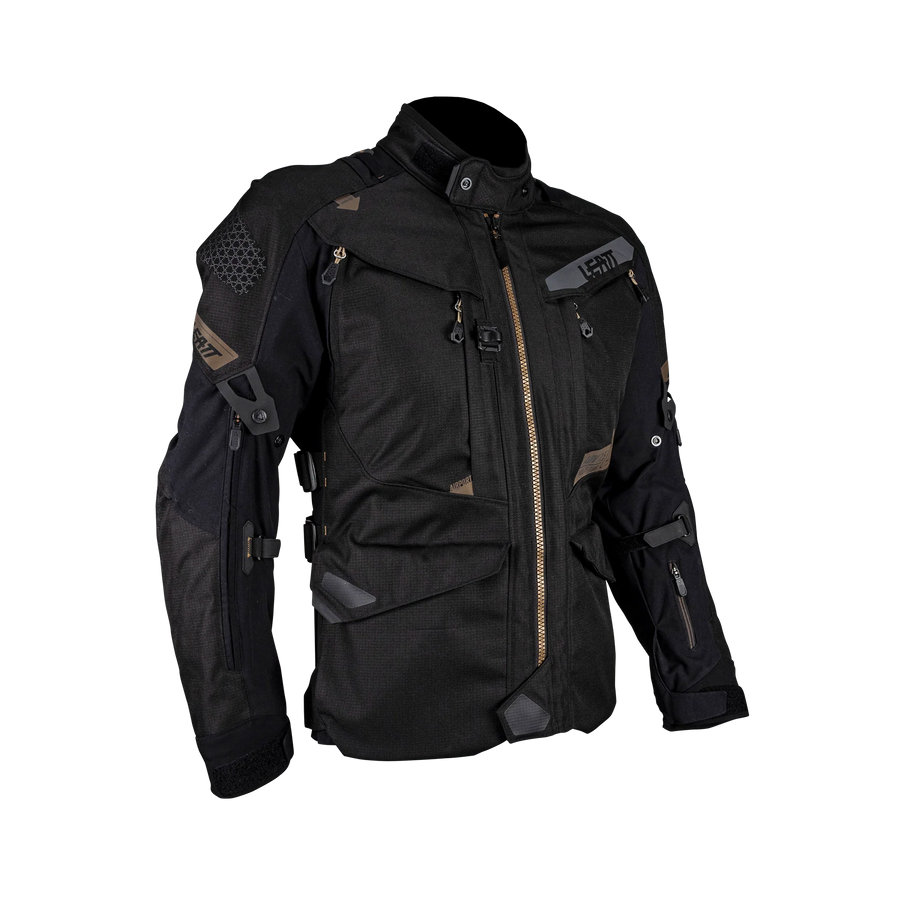
- CE class AA according to EN 17092
- Level 2 protectors on shoulders, elbows, and back, plus chest protection
- Removable HydraDri Max membrane (30,000 mm) that can be worn separately as a rain jacket
- Separate thermal lining, ripstop outer fabric with reinforcements
- Five-year warranty from Leatt
This is the jacket that provides the best answer on most days. The outer shell is not waterproof; the loose HydraDri layer handles that. This sounds like a disadvantage, but it's exactly what you want when riding alternately on asphalt and off-road: without that layer, the jacket breathes much better, and if it rains, you pull it over or under. What truly sets this jacket apart is its protection. Level 2 on all four points plus chest protection is rare in this segment, as most adventure jackets only offer level 1 and no chest pad.
Please note: it is not a light jacket, and without the linings, the outer shell cannot be kept dry in continuous rain.
View the Leatt ADV MultiTour 7.5 →
2. Alpinestars Nazca 3L GTX
Best jacket for those who want the maximum
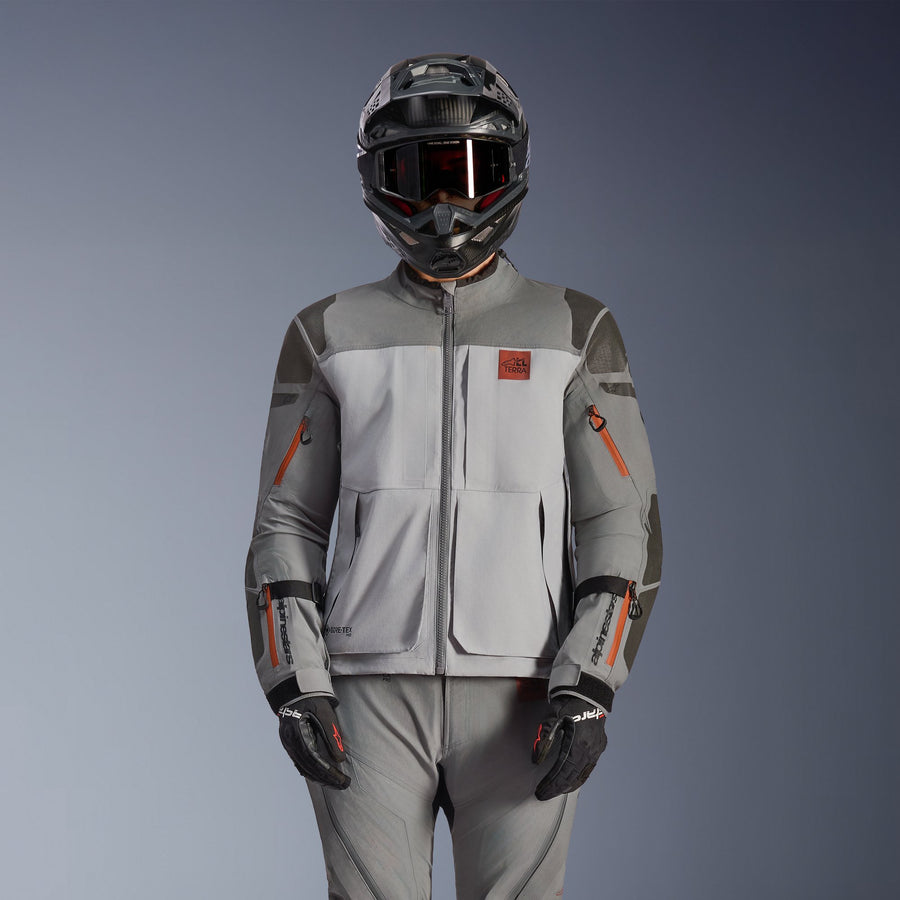
- CE class AA according to EN 17092-3:2020
- Level 2 Nucleon PLASMA Pro protectors on shoulders and elbows
- Gore-Tex Pro in 3-layer laminate, with Gore-Tex 3L stretch panels
- Superfabric reinforcement on shoulders, upper arms, and elbows
- Six intake ventilation openings at the front, four exhaust openings at the back
- Tech-Air ready, five-year extended warranty
The top model from Alpinestars' All Terra line and the jacket by which all others are measured. Gore-Tex Pro is the most expensive laminate available and the reason this jacket costs what it does: the outer fabric does not soak up water, so it dries quickly and doesn't cool you down on a long wet day. The Superfabric panels are a real addition, as this material is specifically designed to resist wear and tear on the areas that first hit the ground.
For whom is this jacket not suitable? If you mostly do short rides in the summer, you'll be paying for performance you'll never use.
View the Alpinestars Nazca 3L GTX →
3. Halvarssons Mora
Best four-season jacket with removable membrane
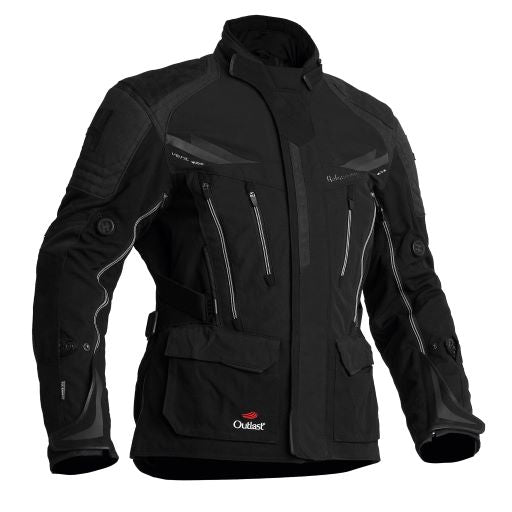
- CE class AA according to EN 17092
- Adjustable level 2 protectors on shoulders and elbows, space for back protector
- Removable Dryway+2.0 membrane with Outlast temperature-regulating lining
- Hi-Art reinforcement and water-repellent nubuck on shoulders and elbows
- Ventilation on sleeves, chest, and an open back construction
- Detachable collar, long connection zipper to trousers
The Mora is thoughtfully designed in Scandinavian style. Both the membrane and the collar are removable, allowing you to ride with an airy outer shell in summer and a completely sealed jacket in winter. The Outlast lining, originally developed for space travel, works with microcapsules that absorb and release heat, balancing temperature fluctuations on a long day.
One thing to note: the DWR treatment on the outer fabric is light. If you ride without the membrane and it rains heavily, the outer fabric will get wet. This is a deliberate choice for this type of jacket, but it means that if in doubt, you should just leave the membrane in the jacket.
4. Alpinestars AMT-8 Stretch Drystar XF
Best freedom of movement
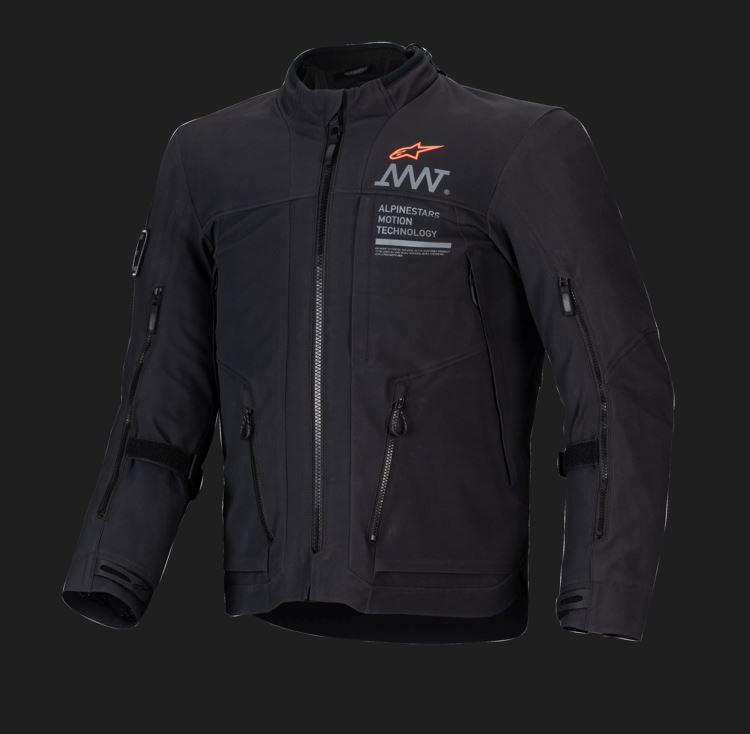
- CE class AA according to EN 17092-3:2020
- Level 2 Nucleon Plasma Pro protectors on shoulders and elbows
- Full stretch outer shell with 3D mesh back
- Removable Drystar XF stretch waterproof lining, wearable under or over the jacket
- Hyperflow ventilation with long openings on arms and chest
- Tech-Air 7x ready
If you spend a lot of time on the footpegs, this is the jacket that will least restrict you. The entire outer shell stretches, and the arms are pre-shaped. The ventilation openings act as scoops that draw in airflow, and there's a permanently open exhaust at the back to ensure flow rather than just intake.
Clever detail: the waterproof lining can be worn both under and over the jacket, and it folds into its own pocket that fits in the back compartment. So you don't have to get off and take off your jacket if it starts to rain.
5. Lindstrands Sunne
Best laminated jacket for Dutch weather
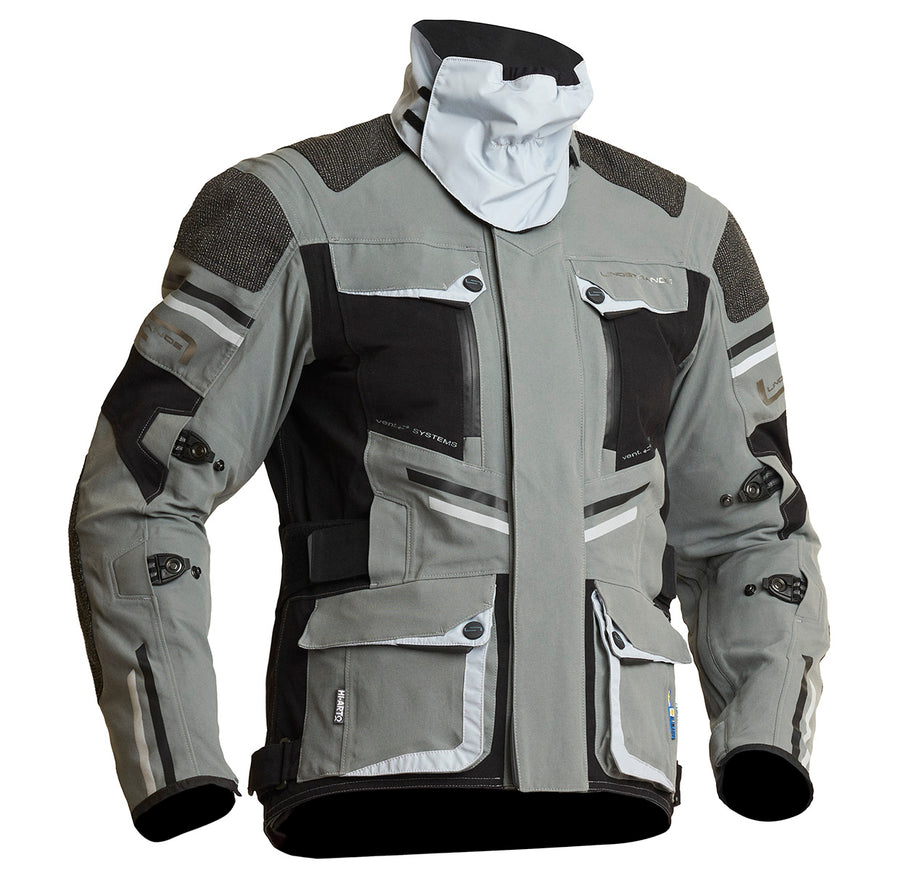
- CE class AA according to EN 17092
- Adjustable level 1 protectors, space for back protector
- Laminated Dryway+ membrane in 2-layer construction
- 420D outer fabric with Hi-Art reinforcement on shoulders and elbows
- Removable thermal lining with Innoborne insulation, wearable separately as a jacket
- Long ventilation zippers on sleeves and chest, open back construction
Laminated means the membrane is attached to the back of the outer fabric, so rain doesn't even penetrate the outer layer. For the Dutch climate, where it often rains lightly rather than one heavy downpour, this is exactly the right choice: the jacket stays light and dries quickly. British testers rode it through continuous heavy rain and stayed dry.
The removable thermal lining is a full-fledged jacket in itself, so you don't need to bring an extra vest for the evening on a multi-day trip.
6. Leatt ADV FlowTour 5.5
Best jacket for warm days
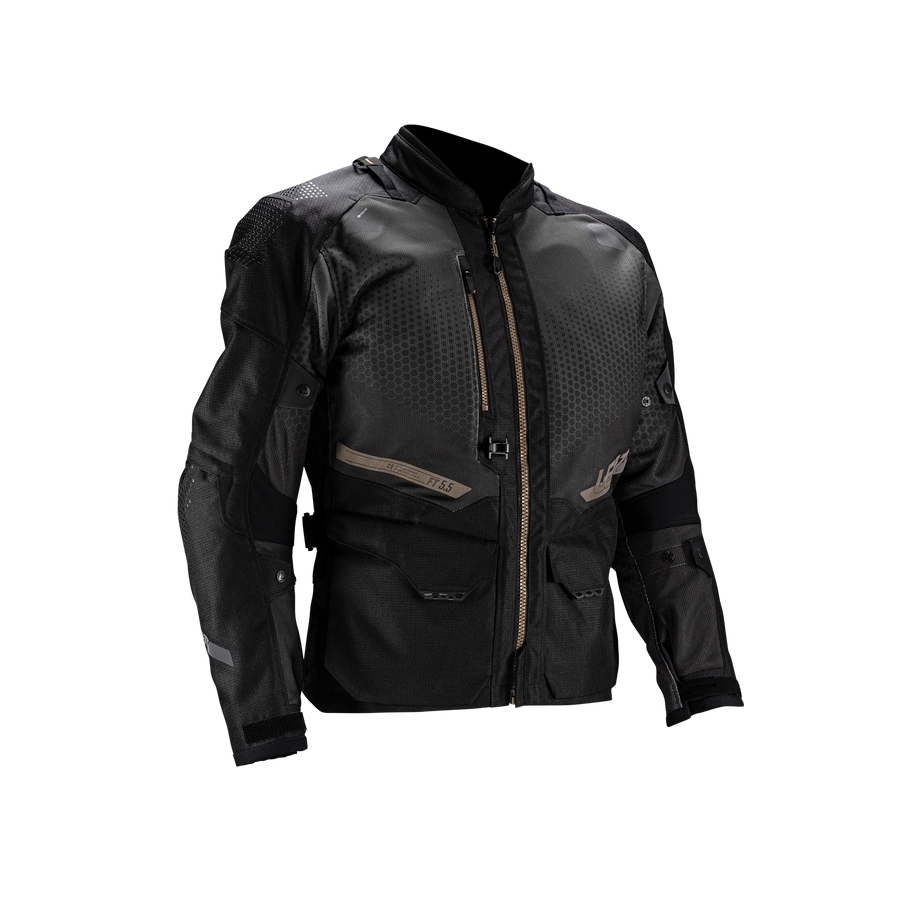
- CE class AA certified
- Highly ventilated outer shell, built for airflow
- Included HydraDri 20K rain jacket as a separate layer
- Part of the same ADV line as the MultiTour, with a five-year warranty
Within the Leatt ADV line, there are three directions: FlowTour for warm weather, MultiTour for warm and cold, DriTour for full waterproofing. The FlowTour is the summer variant, and you notice it immediately: where other adventure jackets have ventilation zippers, this jacket is built from the ground up to allow air through. The rain jacket is included, so a shower doesn't mean your day is over.
Choose this jacket if you primarily ride between April and September, or if you quickly get too warm. If you ride all year round, consider the MultiTour or DriTour from the same line.
View the Leatt ADV FlowTour 5.5 →
7. Alpinestars Andes v4 Drystar
Best price-quality from a major brand
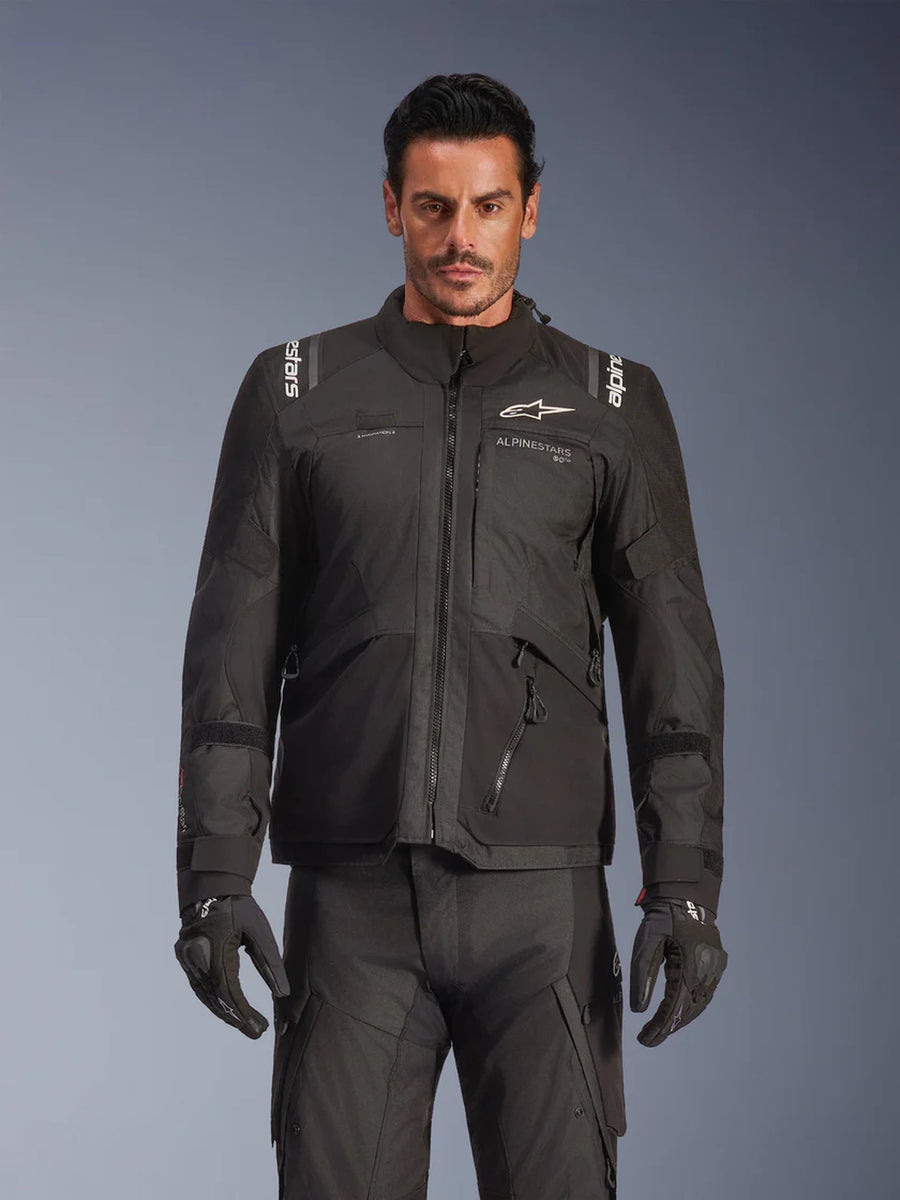
- CE class A according to EN 17092-4:2020
- Level 1 Nucleon Flex Plus protectors on shoulders and elbows
- Drystar membrane, waterproof and breathable
- 450D polyester with ripstop reinforcement and stretch softshell panels
- Removable thermal lining with full sleeves
- Direct chest ventilation and an overlapping back closure for air circulation
- Tech-Air ready
The Andes has been Alpinestars' best-selling adventure jacket for years, and version 4 is the most complete yet. For this price, you get a Drystar membrane, a removable thermal lining, waterproof pockets, and the option to wear a Tech-Air airbag system underneath later.
To be fair about the difference from the jackets above: this is a class A jacket with level 1 protectors. That's fine for touring and commuting, but it's one level below the AA jackets on this list. If you want more, the Andes Pro Drystar XF is the heavier variant in the same family.
View the Alpinestars Andes v4 →
8. Rusty Stitches Cliff
Best entry-level with laminated membrane
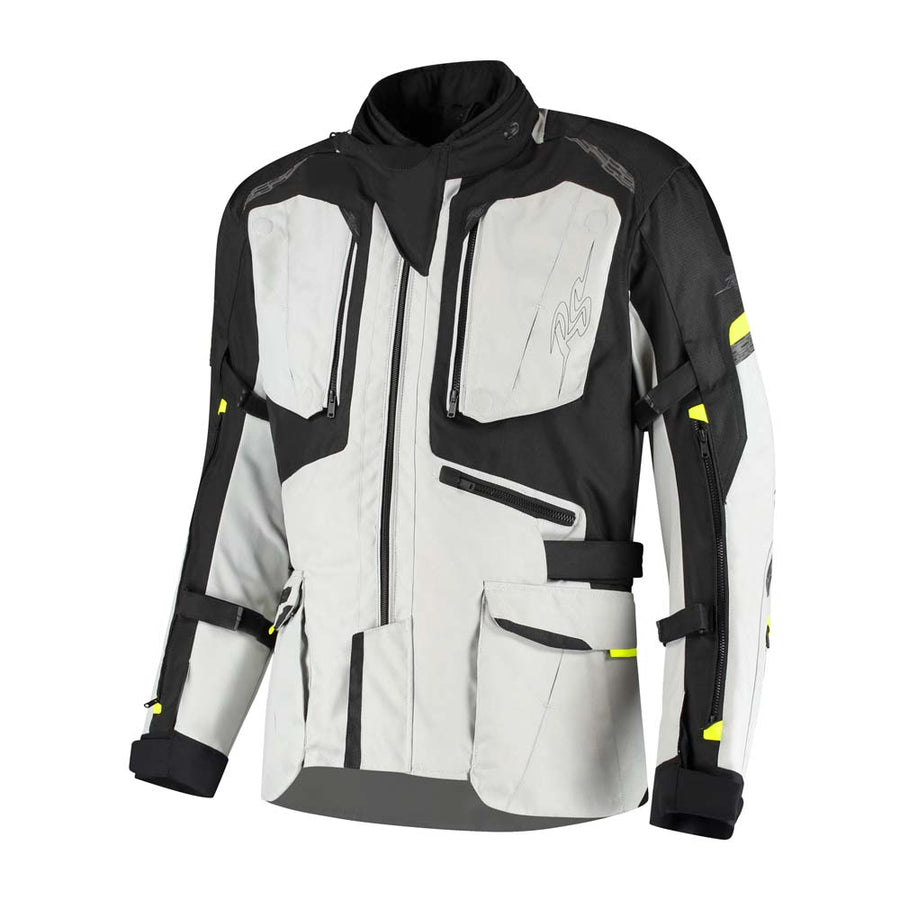
- CE class AA
- Laminated Humax membrane, windproof and waterproof
- 3-in-1 construction with removable lining
- Ventilation openings on the chest with exhaust through the back
- Protectors on shoulders and elbows, adjustable at waist and arms
A laminated AA jacket for this price was unthinkable a few years ago. The Cliff has the construction of a much more expensive jacket: laminate instead of a separate rain layer, a removable lining, and a well-thought-out ventilation system that draws air in through the chest and exhausts it through the back.
Where the difference lies with the top of this list: in hours of heavy rain, this jacket will reach its limits sooner than a Gore-Tex Pro or Dryway laminate. For normal showers and day trips, that's not a problem, and you also pay a fraction of the price.
View the Rusty Stitches Cliff →
9. Oxford Rockland
Best 3-in-1 for those who want to cover all seasons
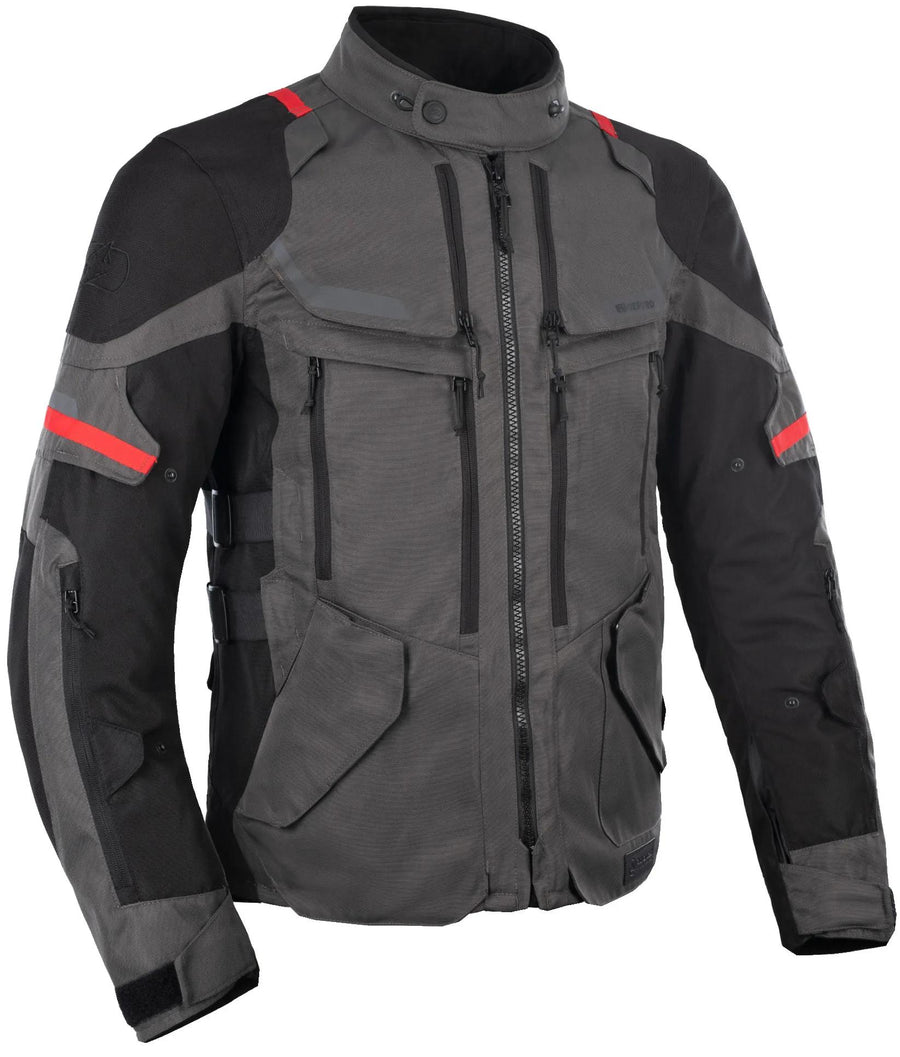
- CE class AA according to EN 17092-3:2020
- Level 1 protectors on shoulders and elbows according to EN 1621-1:2012, plus back protector pocket
- Dry2Dry modular construction with 8,000 mm water column and 3,000 g/m2/24h breathability
- 600 denier polyester outer shell with extra dobby polyester on shoulders and elbows
- Removable waterproof inner jacket and removable thermal jacket
- Large fold-away ventilation panels on chest, torso, and back
Three jackets in one: outer shell, waterproof layer, and thermal layer, all combinable separately. In summer, you ride with only the outer shell and all ventilation open; in winter, with everything in. British testers rode it in the Himalayas and in a wet English winter and were satisfied with both.
The well-known objection to this type of jacket: the waterproof layer is on the inside, so you have to get off and take off the jacket to put it in. And if you don't have it in, the outer shell will get wet.
10. Lindstrands Transtrand
Best budget choice
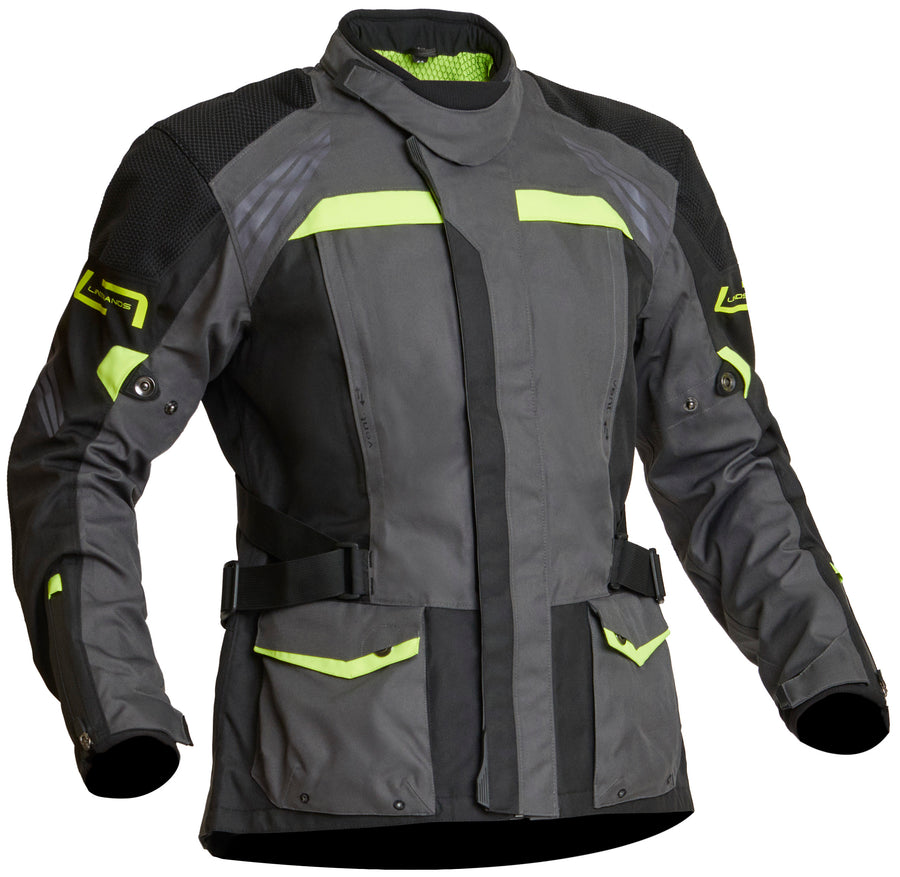
- CE class AA according to EN 17092-3:2020
- Adjustable level 1 protectors, space for back protector
- Laminated Dryway membrane in 2-layer construction
- 420D hi-tenacity outer fabric, double-layered on shoulders and elbows
- Ventilation openings on the chest that also serve as pockets, open back construction
- Long connection zipper to trousers
The Transtrand is considered one of the cheapest laminated motorcycle jackets available, and that's precisely why it's interesting. You get the same Dryway membrane technology as in the more expensive Lindstrands models, in an AA-certified jacket with double fabric in the areas that take the most abuse.
What you don't get is a thermal lining. So for the colder months, you'll need to wear your own insulating layer underneath. For spring, summer, and autumn, this is one of the sharpest choices on the entire list.
View the Lindstrands Transtrand →
What to look for when choosing an adventure motorcycle jacket
CE Class: AAA, AA, or A
The European standard EN 17092 classifies motorcycle clothing into classes based on abrasion resistance. AAA is the heaviest class and is mainly found on leather racing suits. AA is the class for touring and adventure and is the right choice for almost every rider. A is one level lighter, which often goes hand in hand with more ventilation and less weight. The class is indicated on the CE label inside the jacket.
Protectors: Level 1 or Level 2
Protectors are tested separately according to EN 1621-1. Level 2 allows less force through than Level 1 and is therefore safer, but usually slightly thicker. Also, check if a back protector is included or only a pocket where you can insert one yourself. In many jackets, the latter is the case.
Laminated or removable membrane
This is the most important choice, and there is no universally correct answer. In a laminated jacket, the membrane is attached to the outer fabric. The jacket does not soak up water, dries quickly, and you never have to stop if it starts to rain. With a removable membrane, you take out the waterproof layer when it's warm, which significantly improves the jacket's ventilation. If you ride a lot off-road or in warm countries, you'll want a removable one. If you mainly ride in Northwestern Europe, laminated is generally more practical.
Water Column
Waterproofness is expressed in millimeters of water column. Around 10,000 mm is for normal showers, 20,000 mm and above is intended for long days in continuous rain. The accompanying number, in g/m2/24h, indicates how much vapor can escape. This second number determines whether you get wet from your own sweat inside.
Ventilation
Don't just look at the number of zippers, but at the airflow. A jacket with openings in the front but no exhaust in the back will fill with warm air that has nowhere to go. The best adventure jackets have an intake on the chest and arms and an exhaust on the back.
The right size
Sizes vary by brand. Scandinavian brands like Halvarssons and Lindstrands use EU sizes that differ from Alpinestars or Leatt's S to XXL. Each product page includes the size chart for that brand, and our size advisor will help you find the right size in a few steps.
If you are between two sizes, choose the smaller one for motorcycle clothing. Protection must stay where it belongs, and an overly loose jacket will slide away from your shoulder or elbow in a fall. Keep in mind that you might want to wear a thermal layer underneath in winter.
Frequently Asked Questions
What is the difference between an adventure motorcycle jacket and a touring jacket?
An adventure jacket is built for versatile on- and off-road use. It has a looser fit, more freedom of movement for standing riding, more ventilation, and often a removable membrane. A touring jacket is optimized for long distances on asphalt in an upright sitting position and usually has fewer adjustment options.
Which CE class do I need for adventure riding?
Class AA according to EN 17092 is the common choice for touring and adventure. Class A is lighter and airier and can be a conscious choice if you mainly ride in warm conditions.
Is a laminated jacket better than a jacket with a removable membrane?
Not by definition. Laminated is more practical in changeable weather because you don't have to get off and the jacket doesn't soak up water. A removable membrane ventilates better once you take it out, which is more comfortable in warm weather and off-road riding.
Can I wear an airbag vest under an adventure jacket?
With some models, yes. Jackets designated as Tech-Air ready are specifically designed to be worn with an Alpinestars airbag system underneath. For other jackets, it depends on the fit and the remaining space.
What does shipping cost at WheelsWork?
We offer free shipping on orders over 150 euros. Below that, standard shipping costs apply, which you will see in your shopping cart.
Complete your gear
A jacket is one part of the whole. Also check out:
- All adventure motorcycle jackets
- Adventure motorcycle pants
- Adventure motorcycle gloves
- Adventure motorcycle boots
- Protectors and back protectors
View the full collection of adventure motorcycle jackets →
An adventure motorcycle jacket has to do three things at once: protect you in a crash, keep you dry in the rain, and keep you cool when you are standing on the pegs crawling over a gravel track. Those three demands work against each other, which is why adventure jackets differ so much. One keeps water out with a membrane bonded to the outer shell, another with a separate rain layer you pull out the moment the sun comes through.
Below are the ten adventure jackets we rate highest right now, ranked on what they actually deliver: CE class, protector level, membrane type, ventilation and what you get for your money. Every jacket comes from our own range and is available to order.
How we built this top 10
We judged each jacket on five points:
- CE class under EN 17092. Class AA is the standard for touring and adventure, class A is one step down and usually lighter and airier.
- Protectors. Level 1 or level 2 under EN 1621-1, and whether there is room for a back protector.
- Type of waterproofing. Laminated (membrane bonded to the outer shell) or a removable membrane.
- Ventilation. How much air actually moves through when it gets warm.
- Price against what you get.
1. Leatt ADV MultiTour 7.5
Best all-round adventure jacket
- CE class AA under EN 17092
- Level 2 protectors at shoulders, elbows and back, plus chest protection
- Removable HydraDri Max membrane (30,000 mm) that works as a standalone rain jacket
- Removable thermal liner, ripstop outer shell with reinforcements
- Five-year warranty from Leatt
This is the jacket with the best answer on most days. The outer shell is not waterproof; the separate HydraDri layer handles that. Sounds like a drawback, but it is exactly what you want when you mix tarmac and gravel: without that layer the jacket breathes far better, and when it rains you pull it on over or under. What really sets this jacket apart is the protection. Level 2 at all four points plus a chest protector is rare in this segment, since most adventure jackets only supply level 1 and no chest pad.
Worth knowing: it is not a light jacket, and without the liners the outer shell will not stay dry in sustained rain.
View the Leatt ADV MultiTour 7.5 →
2. Alpinestars Nazca 3L GTX
Best jacket if you want the maximum
- CE class AA under EN 17092-3:2020
- Level 2 Nucleon PLASMA Pro protectors at shoulders and elbows
- Gore-Tex Pro three-layer laminate with stretch Gore-Tex 3L panels
- Superfabric reinforcement at shoulders, biceps and elbows
- Six zippered front intake vents and four rear exhaust vents
- Tech-Air ready, five-year extended warranty
The flagship of the Alpinestars All Terra line and the jacket the rest measure themselves against. Gore-Tex Pro is the most expensive laminate on the market and the reason this jacket costs what it does: the outer fabric does not soak up water, so it dries fast and will not chill you on a long wet day. The Superfabric panels are a genuine addition, because that material is built specifically to resist abrasion and tearing in the areas that hit the ground first.
Who is it not for? If you mostly ride short distances in summer, you are paying for performance you will never call on.
View the Alpinestars Nazca 3L GTX →
3. Halvarssons Mora
Best four-season jacket with a removable membrane
- CE class AA under EN 17092
- Adjustable level 2 protectors at shoulders and elbows, room for a back protector
- Removable Dryway+2.0 membrane with temperature-regulating Outlast lining
- Hi-Art reinforcement and water-repellent nubuck at shoulders and elbows
- Venting on sleeves, chest and an open-back construction
- Detachable collar, long connection zip to the trousers
The Mora is Scandinavian and thought through. Both the membrane and the collar come out, so in summer you ride an airy outer shell and in winter you have a fully closed jacket. The Outlast lining was originally developed for spaceflight and works with microcapsules that absorb and release heat, which smooths out the temperature swings across a long day.
One thing to know: the DWR treatment on the outer fabric is light. Ride without the membrane and get caught in heavy rain and the outer fabric will wet out. That is the deliberate choice behind this type of jacket, but it means you leave the membrane zipped in when in doubt.
4. Alpinestars AMT-8 Stretch Drystar XF
Best freedom of movement
- CE class AA under EN 17092-3:2020
- Level 2 Nucleon Plasma Pro protectors at shoulders and elbows
- Full-stretch outer shell with 3D mesh back
- Removable waterproof Drystar XF stretch liner, worn under or over the jacket
- Hyperflow ventilation with long chest and arm vents
- Tech-Air 7x ready
If you spend a lot of time on the pegs, this is the jacket that fights you least. The entire outer shell stretches and the arms are pre-curved. The vents act as scoops that catch the airstream, and the permanently open rear exhaust means you get flow-through rather than just intake.
Smart detail: the waterproof liner can be worn either under or over the jacket, and it packs into its own small bag that fits the rear pocket. You do not need to stop and take the jacket off when it starts raining.
5. Lindstrands Sunne
Best laminated jacket for changeable weather
- CE class AA under EN 17092
- Adjustable level 1 protectors, room for a back protector
- Laminated Dryway+ membrane in a two-layer construction
- 420D outer fabric with Hi-Art reinforcement at shoulders and elbows
- Removable thermal liner with Innoborne insulation, wearable as a jacket on its own
- Long vent zips on sleeves and chest, open-back construction
Laminated means the membrane sits on the back of the outer fabric, so rain never gets into the outer layer at all. For northwest European weather, where it rains lightly and often rather than heavily and once, that is the right call: the jacket stays light and dries quickly. British testers rode it through sustained downpours and stayed dry.
The removable thermal liner is a full jacket in its own right, so you do not need to pack an extra layer for the evenings on a multi-day trip.
6. Leatt ADV FlowTour 5.5
Best jacket for hot days
- CE class AA certified
- Heavily vented outer shell, built around airflow
- HydraDri 20K rain jacket included as a separate layer
- Part of the same ADV line as the MultiTour, with a five-year warranty
The Leatt ADV line runs in three directions: FlowTour for warm weather, MultiTour for warm and cold, DriTour for fully waterproof. The FlowTour is the summer option and you notice immediately: where other adventure jackets have vent zips, this one is built from the ground up to let air through. The rain jacket is included, so a shower does not end your day.
Choose this one if you mainly ride between April and September, or if you overheat easily. If you ride year-round, look at the MultiTour or DriTour from the same line.
View the Leatt ADV FlowTour 5.5 →
7. Alpinestars Andes v4 Drystar
Best value from a major brand
- CE class A under EN 17092-4:2020
- Level 1 Nucleon Flex Plus protectors at shoulders and elbows
- Drystar membrane, waterproof and breathable
- 450D polyester with ripstop reinforcement and stretch softshell panels
- Removable full-sleeve thermal liner
- Direct chest venting and an overlap back closure for air circulation
- Tech-Air ready
The Andes has been the best-selling Alpinestars adventure jacket for years, and version 4 is the most complete yet. For this money you get a Drystar membrane, a removable thermal liner, waterproof pockets and the option of fitting a Tech-Air airbag system underneath later.
Being straight about the difference with the jackets above: this is a class A jacket with level 1 protectors. That is fine for touring and commuting, but it is a step below the AA jackets in this list. If you want more, the Andes Pro Drystar XF is the heavier variant in the same family.
View the Alpinestars Andes v4 →
8. Rusty Stitches Cliff
Best entry point with a laminated membrane
- CE class AA
- Laminated Humax membrane, windproof and waterproof
- 3-in-1 construction with a removable liner
- Chest vents with exhaust through the back
- Shoulder and elbow protectors, adjustable at the waist and arms
A laminated AA jacket at this price was unthinkable a few years ago. The Cliff has the construction of a far more expensive jacket: laminate instead of a separate rain layer, a removable liner, and a well-judged venting system that takes air in at the chest and pushes it out through the back.
Where it differs from the top of this list: in hours of heavy rain this jacket reaches its limits sooner than a Gore-Tex Pro or a Dryway laminate. For normal showers and day rides that is not an issue, and you pay a fraction of the price.
View the Rusty Stitches Cliff →
9. Oxford Rockland
Best 3-in-1 for covering every season
- CE class AA under EN 17092-3:2020
- Level 1 shoulder and elbow protectors under EN 1621-1:2012, plus a back protector pocket
- Dry2Dry modular construction rated 8,000 mm waterproof and 3,000 g/m2/24h breathable
- 600 denier polyester outer shell with additional dobby polyester at shoulders and elbows
- Removable waterproof inner jacket and removable thermal jacket
- Large fold-away vent panels on chest, torso and back
Three jackets in one: outer shell, waterproof layer and thermal layer, all freely combined. In summer you ride the shell alone with every vent open; in winter you run everything. British testers rode it in the Himalayas and through a wet English winter and were happy with both.
The familiar objection with this type of jacket: the waterproof layer sits inside, so you have to stop and take the jacket off to fit it. And if it is not in, the outer shell gets wet.
10. Lindstrands Transtrand
Best budget choice
- CE class AA under EN 17092-3:2020
- Adjustable level 1 protectors, room for a back protector
- Laminated Dryway membrane in a two-layer construction
- 420D hi-tenacity outer fabric, doubled at shoulders and elbows
- Chest vents that double as pockets, open-back construction
- Long connection zip to the trousers
The Transtrand is widely considered one of the cheapest laminated motorcycle jackets available, and that is exactly what makes it interesting. You get the same Dryway membrane technology as in the pricier Lindstrands models, in an AA-certified jacket with doubled fabric in the areas that take the most punishment.
What you do not get is a thermal liner. For the cold months you add your own insulating layer underneath. For spring, summer and autumn this is one of the sharpest choices in the whole list.
View the Lindstrands Transtrand →
What to look for in an adventure jacket
CE class: AAA, AA or A
The European standard EN 17092 sorts motorcycle clothing into classes based on abrasion resistance. AAA is the highest class and is mostly found on leather race suits. AA is the class for touring and adventure and is the right choice for almost every rider. A is a step lighter, which usually comes with more ventilation and less weight. The class is printed on the CE label inside the jacket.
Protectors: level 1 or level 2
Protectors are tested separately under EN 1621-1. Level 2 transmits less force than level 1 and is therefore safer, though usually slightly thicker. Also check whether a back protector is included or only a pocket for one you buy yourself. On many jackets it is the latter.
Laminated or removable membrane
This is the key decision and there is no universally right answer. On a laminated jacket the membrane is bonded to the outer fabric. The jacket does not soak up water, dries quickly, and you never have to stop when it rains. With a removable membrane you take the waterproof layer out when it is warm, which lets the jacket ventilate far better. If you ride a lot off-road or in hot countries, you want removable. If you mostly ride in northwest Europe, laminated is generally more practical.
Water column
Waterproofing is expressed in millimetres of water column. Around 10,000 mm covers normal showers; 20,000 mm and above is meant for long days in sustained rain. The second figure, in g/m2/24h, tells you how much vapour can escape. That second number decides whether you end up wet from your own sweat.
Ventilation
Look at flow-through, not just the number of zips. A jacket with intakes at the front but no exhaust at the back fills with warm air that has nowhere to go. The best adventure jackets take air in at the chest and arms and let it out through the back.
Getting the size right
Sizing varies by brand. Scandinavian brands such as Halvarssons and Lindstrands use EU sizes that run differently from the S to XXL of Alpinestars or Leatt. Every product page carries that brand's size chart, and our size advisor takes you to the right size in a few steps.
If you fall between two sizes, go with the smaller one for motorcycle gear. Protection has to stay where it belongs, and a jacket that is too loose will shift off your shoulder or elbow in a crash. Do allow room for a thermal layer underneath in winter.
Frequently asked questions
What is the difference between an adventure jacket and a touring jacket?
An adventure jacket is built for mixed use on and off the road. It fits looser, allows more movement for standing on the pegs, ventilates more and more often has a removable membrane. A touring jacket is optimised for long tarmac distances in an upright riding position and usually has fewer adjustment points.
Which CE class do I need for adventure riding?
Class AA under EN 17092 is the usual choice for touring and adventure. Class A is lighter and airier and can be a deliberate trade-off if you mainly ride in warm conditions.
Is a laminated jacket better than one with a removable membrane?
Not by default. Laminated is more practical in changeable weather because you do not have to stop and the jacket does not wet out. A removable membrane ventilates better once you take it out, which is more comfortable in warm weather and off-road.
Can I wear an airbag vest under an adventure jacket?
With some models, yes. Jackets marked Tech-Air ready are specifically designed to take an Alpinestars airbag system underneath. On other jackets it depends on the cut and the room left over.
What does shipping cost at WheelsWork?
We ship free from 150 euro. Below that the normal shipping rates apply, which you will see in your cart.
Complete your kit
A jacket is one part of the whole. Also worth a look: