


Short answer: staying warm on a motorcycle comes down to three layers. A base layer that pulls sweat away from your skin, an insulating layer that holds heat, and a wind- and waterproof outer layer. Your hands and your torso cool down first. If you keep riding into winter, you will end up at electrically heated gear running on 12V.
This guide works through your kit from the inside out: what each layer does, where it usually goes wrong, and which solution suits which kind of riding.
Why cold is a safety issue
Cold hands are not just uncomfortable. Once your fingers stiffen up you lose feel at the brake and clutch lever. You squeeze harder than you need to and you modulate less precisely. Shivering also costs energy and attention, exactly the two things you need on a wet road covered in leaves.
The order in which you cool down is the same for almost everyone: fingers first, then toes, then your torso. Tackle it in that same order.
The mistake most riders make
A thick hoodie under your riding jacket feels warm in the garage. On the bike it works against you. Cotton absorbs sweat and holds onto it, so you end up clammy and cold at the first stop. A bulky jumper also fills up the space inside your jacket, while it is exactly the still air between layers that insulates.
Better approach: start thin, and do one thing properly per layer.
Layer 1: the base layer
The bottom layer has one job: moving sweat away from your skin. If it fails at that, nothing above it works properly either.
Merino wool
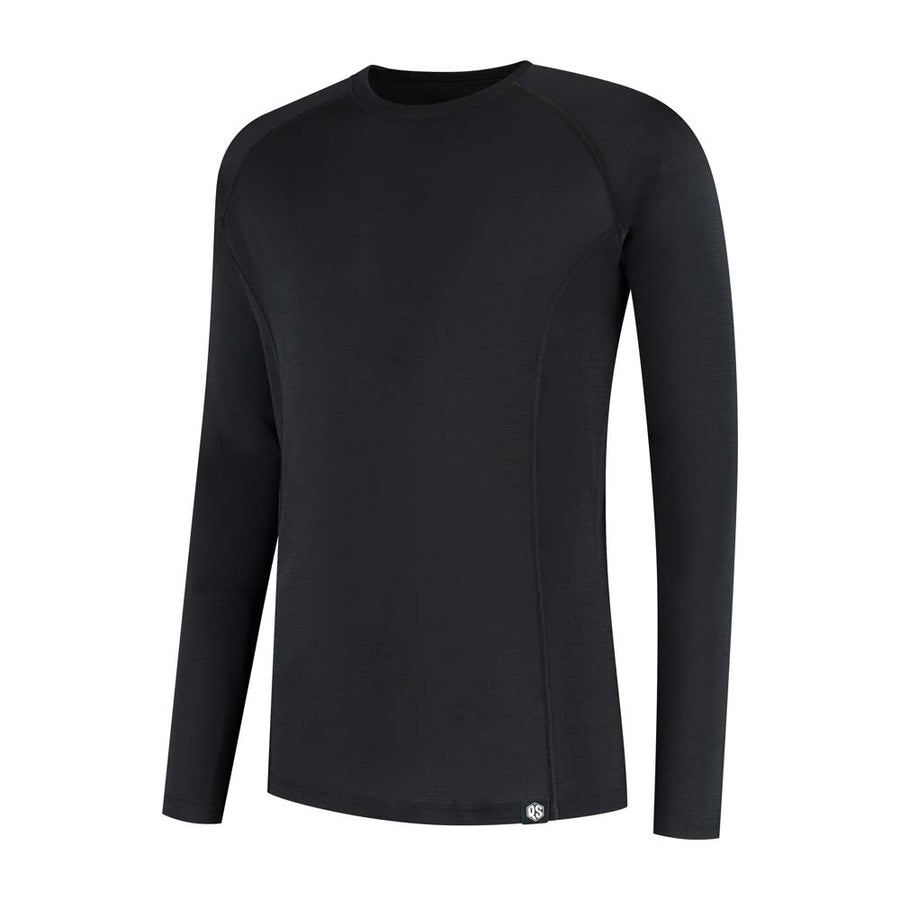
Merino regulates temperature naturally, keeps insulating when damp and resists odour. That last point matters on a weekend away or a multi-day tour where you cannot wash every evening. The Rusty Stitches Merino Baselayer 200 is the midweight version, made from 100 percent merino wool. Watch the fit: it is relaxed, so Rusty Stitches advises one size down for a closer fit.
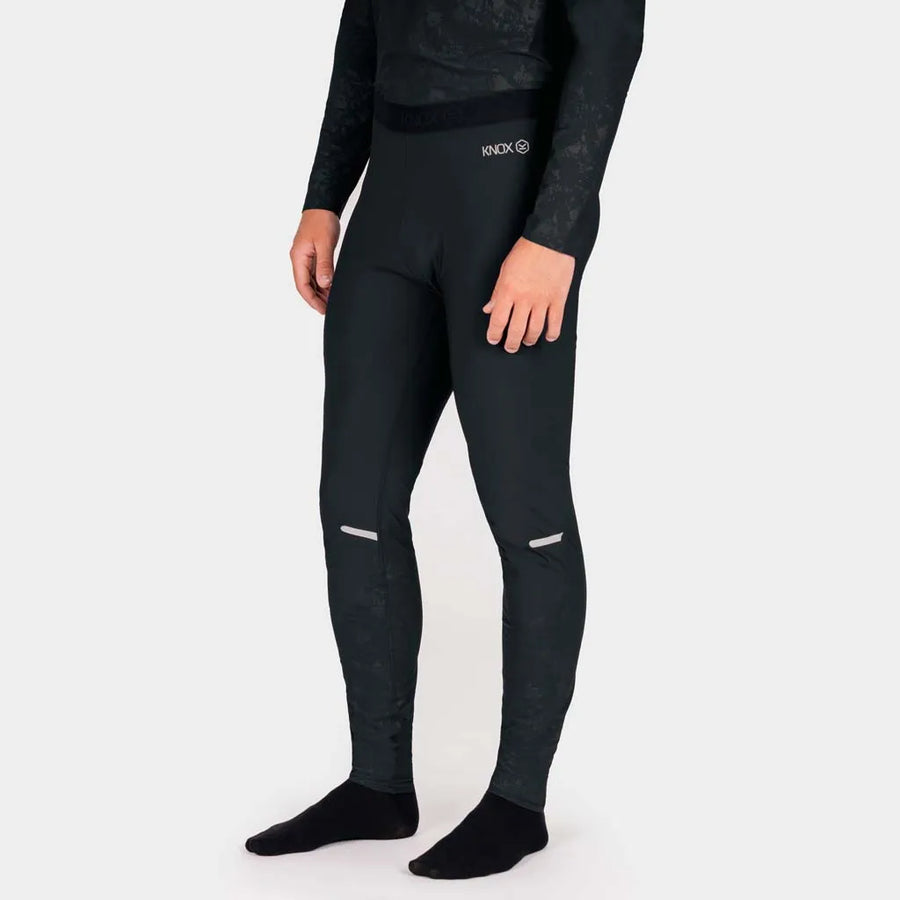
Doing only your upper body is half the job. Your thighs catch a lot of wind on a bike, especially on a naked.

Synthetic
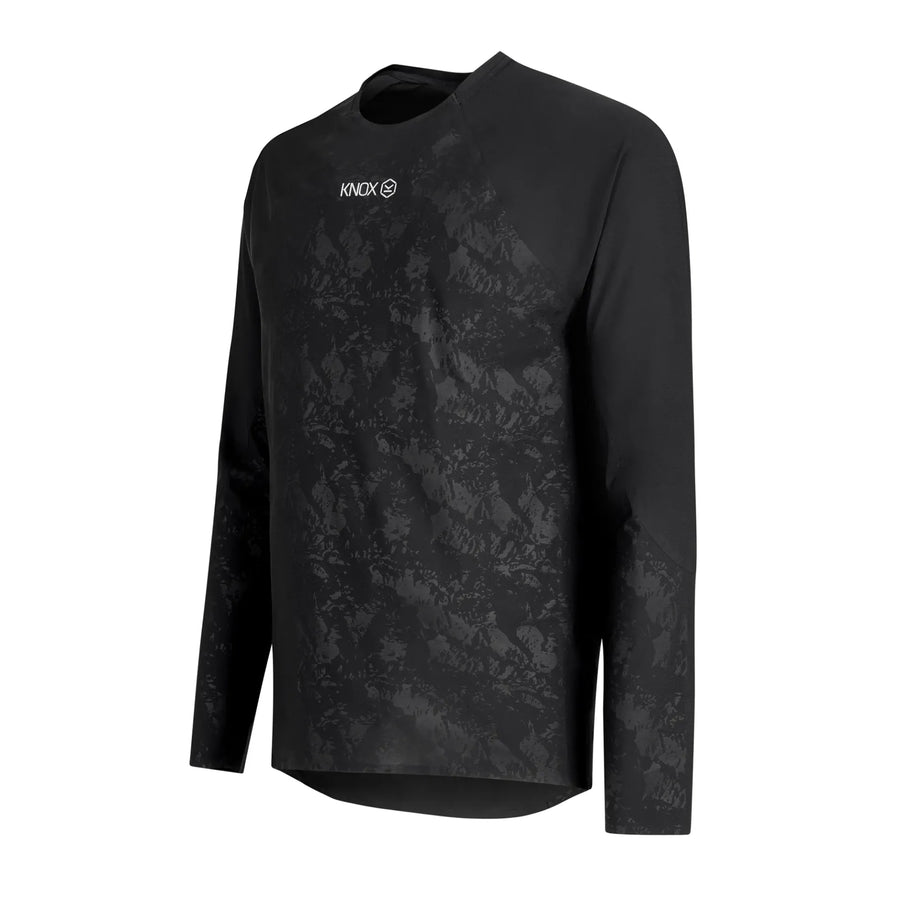
Synthetic dries faster than merino and works well if you switch between riding and walking a lot. The Knox Dual Active uses polyester and elastane with HYDROCOOL for moisture management and SILVERPLUS for antibacterial performance. More important on a bike: the seams are welded and stitching is kept to a minimum, so the shirt sits flat against the skin and does not chafe under armour.
Layer 2: insulation or heating
This is where the decision sits. Insulation holds on to what your body produces. Heating adds warmth. On a bike you generate very little heat yourself, because you are sitting still in the wind. That is why insulation eventually runs into its limit on longer rides in the cold.
The Gerbing Heated Jacket Liner is not a bulky winter jacket but a thin softshell you wear under your normal riding jacket. The Microwire elements run across chest, back, arms and collar. It comes with a 12V lead that connects to your bike battery, so you have unlimited heat for as long as the engine runs. The heating elements carry a lifetime warranty.

A controller is not a luxury here. Without one the liner always runs at full power, and on most rides that is simply too warm.

Layer 3: wind and water
Plenty of four-season jackets are waterproof, but not all of them, and in sustained rain the outer fabric can wet out. A rain suit over your normal gear is then the fastest fix. It also blocks wind, which on its own removes a large part of the cold you feel.

If you want to keep it compact and only need an extra layer over your jacket, a separate rain jacket is an alternative.

Hands: three routes to warm fingers
Your hands sit in full windblast and barely move. That is why they cool down first. There are three solutions, and they do not rule each other out.
| Route | Suits | Advantage | Watch out for |
|---|---|---|---|
| Winter glove with membrane | Daily use and medium-length rides | No cables or batteries needed | Past a certain point thicker is not warmer, only bulkier |
| Heated grips | Riders who always use the same bike | Fitted to the bike, you cannot forget them | Warms the palm, not the back of the hand where the wind hits |
| Heated gloves | Long rides and serious cold | Warms the back of the hand and the fingers | Needs a lead to the battery or separate packs |
1. A good winter glove
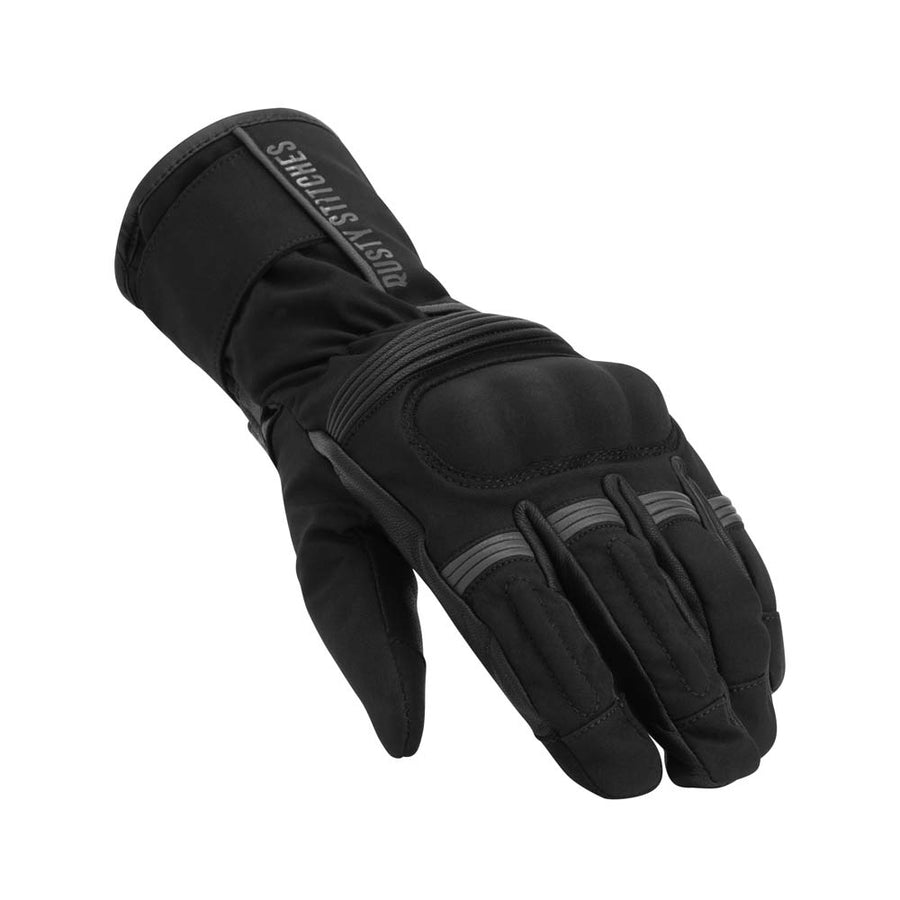
The Rusty Stitches Alex has a Hipora membrane, a thermal lining, hard knuckle protection and CE certification. The index finger is touchscreen compatible, so you can still work your navigation without taking the glove off.
The Furygan Starker combines Primaloft insulation with 37.5 technology for moisture management and D3O impact protection. Primaloft delivers insulation without much bulk, which preserves feel at the bars.

2. Heated grips
Heated grips warm the inside of your hand through the bars. They work, they are always on the bike and there is nothing to connect. The drawback is that the windblast hits the back of your hand, and that stays cold. The full explanation of wattage, fitting and current draw is in our separate guide: buying motorcycle heated grips.
3. Heated gloves
This is the difference with heated grips: the heating elements sit in the back of the hand and run all the way to the fingertips, exactly where the wind hits.
The Gerbing Xtreme range delivers 28 watts per pair through the MicrowirePro Xtreme system. The three-setting controller is built into the glove itself, so you adjust while riding without an external module. All versions use a Hipora membrane with Thinsulate insulation and meet CE EN 13594:2015.
The range covers several models that differ in cut and material build. The full specification per model is on the product page.


There is also a women's version with an adjusted fit.

Wired to the battery or separate packs?
Heated Gerbing gear works in two ways, and the choice mostly depends on how you ride.
Wired straight to your bike's 12V battery. Unlimited running time for as long as the engine turns. This is the logical choice for commuting and long touring days. You do have a lead running from your gear to the bike.
On separate battery packs. Completely cable free, which also helps if you get off the bike regularly. The battery kit for the Xtreme gloves contains two rechargeable 12V packs and a charger. Running time depends on the setting: roughly 7 hours at 33 percent, 4 hours at 66 percent and 2 hours at full power.

Note: this battery kit only works with the Gerbing Xtreme gloves.
How to build it up
If you would rather not buy everything at once, this is a sensible order. Each step makes a difference on its own.
- Base layer, top and bottom. The cheapest step with the biggest immediate effect.
- Winter gloves with a membrane. Warm hands matter more than a warm torso.
- Rain suit or rain jacket. Wind and waterproof beats an extra jumper.
- Heated gloves, either on battery packs or wired to the bike.
- Heated jacket liner with a controller, if you also ride through freezing conditions.
Frequently asked questions
Can I run heated gear on any motorcycle?
A 12V connection to the battery works on virtually any bike. What you do need to check is how much output your alternator has left once lighting, ignition and any heated grips have taken their share. On smaller and older bikes that margin is limited. If in doubt, use separate battery packs instead of the bike battery.
Heated gloves or heated grips?
Heated grips warm your palm, heated gloves warm the back of your hand and your fingers. The wind hits the back of the hand, so in serious cold heated gloves have the advantage. If you already run heated grips, pairing them with a good winter glove is often enough.
Is merino better than synthetic?
Both do the job. Merino resists odour and keeps insulating when damp, which is handy on multi-day trips. Synthetic dries faster and is usually cheaper. For commuting synthetic is fine, for touring many riders go merino.
Does an extra jumper under my jacket help?
Usually not. A thick jumper fills the space inside your jacket, while it is the air between layers that insulates. Cotton also holds sweat. A thin base layer with a technical layer over it works better than one bulky layer.
Should I size up for winter?
Not for gloves. A loose glove lets air circulate, feels colder as a result and costs you feel at the bars. For your jacket a little extra room helps if you wear layers underneath, but not so much that the armour shifts around.
Not sure about size or model?
If you cannot work out which version or size fits, get in touch before you order. We will look at your bike, the kind of riding you do and what you already own. Size charts per brand are on our sizing advice page.